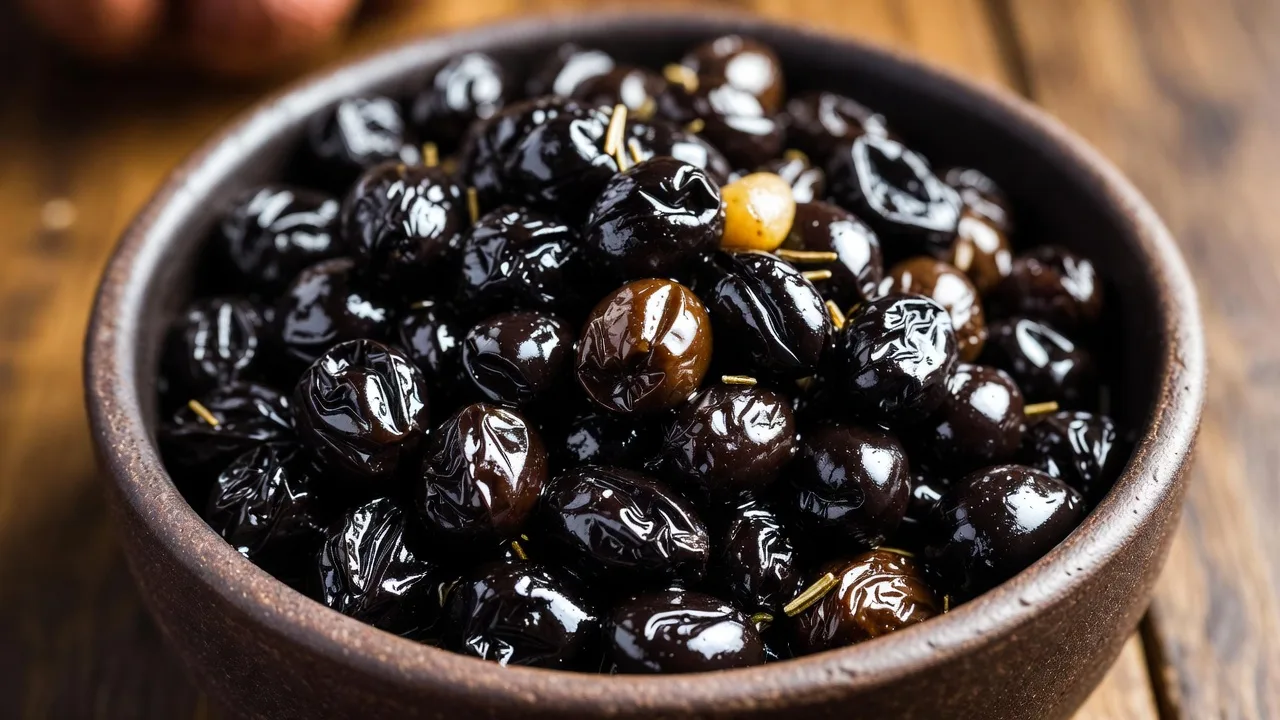
Oil cured olives are the most intensely flavored olives you can eat. The process is ancient and elemental — ripe black olives are packed in coarse sea salt to draw out moisture and bitterness, then submerged in extra virgin olive oil to rehydrate, soften, and develop deep, concentrated flavor. Oil cured olives have a wrinkled, slightly shriveled appearance, a chewy-tender texture, and a rich, meaty taste that brine-cured olives can't match. They're a staple of Mediterranean cuisine — from Moroccan tagines to Italian pasta to Lebanese mezze plates.
How Oil Cured Olives Are Made
The oil curing process is a two-stage method that's been used across the Mediterranean for thousands of years.
Stage 1: Salt Drying
Fully ripe, black olives are layered with coarse sea salt in wooden crates, burlap sacks, or food-grade containers. The salt ratio is typically 1 part salt to 3 parts olives by weight. The salt draws moisture from the olives through osmosis while simultaneously extracting oleuropein — the bitter glycoside that makes raw olives inedible.
This stage takes 3-6 weeks depending on olive variety, size, and ambient temperature. During drying, the olives lose 30-40% of their weight in water. They shrink, wrinkle, and develop the characteristic leathery texture of oil cured olives. The olives are stirred every 2-3 days to ensure even salt distribution and prevent mold.
The salt-drying stage is what distinguishes oil cured olives from brine-cured olives. Brine curing submerges olives in saltwater, which removes bitterness slowly (3-12 months) while maintaining the olive's plump shape. Salt drying is faster and more aggressive — it concentrates flavors rather than diluting them.
Stage 2: Oil Immersion
After salt drying, the olives are rinsed to remove excess surface salt, then submerged in extra virgin olive oil. The oil serves multiple purposes: it rehydrates the shrunken olives slightly, creates an anaerobic (oxygen-free) environment that prevents spoilage, infuses the olives with fruity olive oil flavor, and acts as a natural preservative.
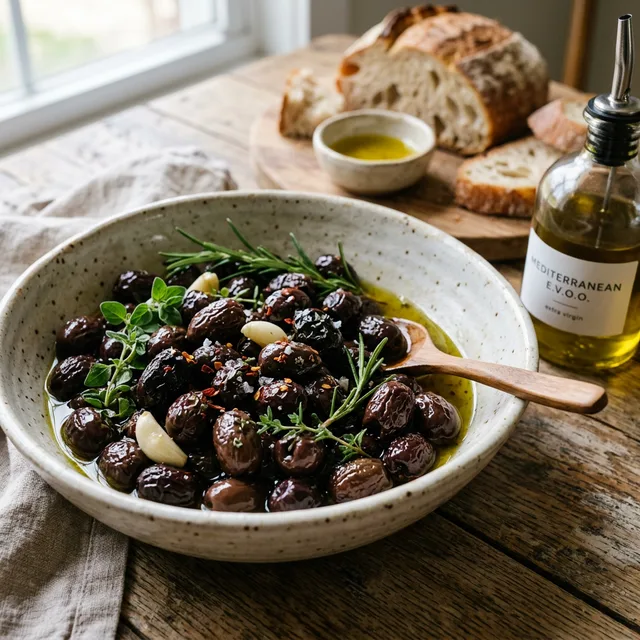
Many producers add aromatics to the oil — dried herbs (rosemary, thyme, oregano), citrus zest (lemon, orange), garlic, chili flakes, or fennel seeds. These flavor the oil, which in turn flavors the olives. After 1-2 weeks of oil immersion, the oil cured olives are ready to eat. They'll continue developing complexity over weeks of storage.
Best Olive Varieties for Oil Cured Olives
Not every olive variety makes good oil cured olives. The best candidates are fully ripe, medium-to-large, and fleshy enough to maintain texture through salt drying.
- Gaeta (Italy): The classic Italian oil cured olive. Small-medium, wrinkled, deep purple-black. Mild, buttery, slightly sweet. Gaeta oil cured olives are the variety most commonly sold in Italian delis and specialty stores.
- Beldi (Morocco): Morocco's native variety — small, intensely flavored, and perfectly suited for oil curing. Moroccan oil cured olives (often labeled "dry-cured Moroccan olives") have an earthy, slightly bitter character with concentrated umami.
- Nyons (France): The Tanche olive from the Nyons region of Provence produces exceptional oil cured olives with AOP (protected designation) certification. Nutty, slightly chocolatey flavor. Premium oil cured olives from a French terroir.
- Throumba (Greece): A unique Greek variety that naturally cures on the tree — olives dry and wrinkle while still attached. Harvested already partially oil-cured by nature. Intense, complex, and truly distinctive.
- Soury (Lebanon): Lebanese oil cured olives made from Soury olives are intensely bitter-savory — the Soury variety's high oleuropein content survives partially through the curing process, creating oil cured olives with more bite than milder varieties.
How to Make Oil Cured Olives at Home
Making oil cured olives at home is straightforward — the process requires patience, not skill.
Ingredients
- 2 lbs (1 kg) fully ripe black olives — firm, unblemished, freshly harvested
- 2 cups (500g) coarse sea salt (not table salt — iodine affects flavor)
- 2 cups (500ml) extra virgin olive oil
- Optional aromatics: 3 sprigs fresh rosemary, 2 strips lemon zest, 1 dried chili, 2 crushed garlic cloves
Method
Week 1-4 (salt drying): Layer olives and salt in a non-reactive container (glass, ceramic, food-grade plastic — not metal). Start with a salt layer, add olives in a single layer, cover with salt, repeat. The top layer should be salt. Cover loosely with cheesecloth (airflow prevents mold). Place in a cool location (10-18°C). Stir every 2-3 days, adding more salt if it becomes saturated with liquid.
Week 4-5 (testing): After 3-4 weeks, taste an olive. It should be pleasantly salty, mildly bitter (not harshly bitter), and have a chewy, concentrated texture. If still too bitter, continue salt curing for another week. The olives should have visibly shrunken and wrinkled.
Week 5+ (oil immersion): Rinse the oil cured olives under cold water to remove excess salt. Pat dry. Place in a clean glass jar. Add optional aromatics. Cover completely with EVOO. Seal and store in a cool, dark place. The oil cured olives are ready after 1 week of immersion but improve over 2-4 weeks.
Storage: Oil cured olives kept submerged in olive oil in a sealed glass container last 6-12 months at room temperature. Refrigeration extends shelf life but may cause the olive oil to solidify — let it return to room temperature before serving.
Oil Cured Olives: Mediterranean Recipes
Pasta Puttanesca with Oil Cured Olives
The classic Neapolitan pasta demands oil cured olives — their concentrated, meaty flavor stands up to anchovies, capers, and tomato in a way that bland brine-cured olives can't. Sauté 4 sliced garlic cloves and 1 teaspoon chili flakes in 3 tablespoons EVOO. Add 6 anchovy fillets (they'll dissolve), 1 cup pitted oil cured olives, 2 tablespoons capers, and a can of crushed San Marzano tomatoes. Simmer 15 minutes. Toss with spaghetti. Finish with raw early harvest EVOO and fresh parsley.
Moroccan Chicken Tagine with Oil Cured Olives
Oil cured olives are essential to authentic Moroccan tagines. Brown chicken thighs in olive oil. Add sliced onions, preserved lemon, ginger, saffron, cumin, and a cup of water. Simmer covered for 40 minutes. Add 1 cup oil cured olives in the last 10 minutes. The olives absorb the tagine's spiced broth while contributing their own concentrated richness. Serve over couscous.
Tapenade
The Provençal olive spread is at its best with oil cured olives. Pulse 2 cups pitted oil cured olives with 3 tablespoons capers, 4 anchovy fillets, 2 garlic cloves, juice of 1 lemon, and 1/4 cup EVOO in a food processor. Don't over-process — tapenade should be chunky, not smooth. Spread on crostini, use as a sandwich condiment, or stir into pasta. Oil cured olives make tapenade with depth that brine-cured versions lack.
Mediterranean Olive Oil Bread
Fold 1 cup chopped oil cured olives into focaccia or ciabatta dough before the final rise. The oil from the olives enriches the bread's crumb while the concentrated olive flavor permeates every slice. Drizzle the top with EVOO, sprinkle with flaky salt and fresh rosemary. Bake at 220°C until golden.
Mezze Platter
Oil cured olives are the centerpiece of any serious mezze spread. Arrange alongside hummus (drizzled with EVOO), labneh, pickled vegetables, fresh radishes, warm flatbread, and herb-infused olive oil for dipping. The wrinkled, oil-glistening olives add visual drama and bold flavor that anchors the entire spread.
Oil Cured Olives: Nutrition Profile
Oil cured olives are nutrient-dense due to their concentrated, dehydrated state.
- Calories: ~35-45 per 5 olives — higher than brine-cured (25-30 per 5) due to oil absorption and lower water content
- Fat: 3-4g per 5 olives — predominantly monounsaturated oleic acid from both the olive flesh and the curing oil
- Sodium: 200-350mg per 5 olives — lower than most brine-cured olives because excess salt is rinsed off before oil immersion
- Polyphenols: Oil cured olives retain significant polyphenol content. While salt curing removes some oleuropein (that's the debittering mechanism), oil cured olives preserve more polyphenols than lye-cured commercial olives, which strip virtually all phenolic compounds
- Iron: 0.5-1mg per 5 olives — a meaningful contribution to vegan and vegetarian iron intake
- Fiber: 0.5-1g per 5 olives — the dehydration concentrates dietary fiber
Oil Cured Olives vs. Other Curing Methods
vs. Brine-cured: Brine-cured olives (Kalamata, Castelvetrano, Cerignola) are plumper, milder, and juicier. Oil cured olives are denser, more intensely flavored, and chewier. Use brine-cured for eating by the handful; use oil cured olives where you need concentrated olive flavor in cooking.
vs. Lye-cured: Lye (sodium hydroxide) curing is the fastest method — removing bitterness in hours rather than weeks. But lye strips virtually all polyphenols and produces bland, uniform olives with little character. Oil cured olives retain more nutritional value and dramatically more flavor.
vs. Water-cured: Water curing involves soaking olives in fresh water changed daily for weeks. It produces very mild, almost neutral olives. Oil cured olives are the opposite — maximum flavor concentration. Different applications entirely.
Where to Buy Quality Oil Cured Olives
- Italian delis: Gaeta oil cured olives are a staple at Italian specialty stores. Buy from the olive bar for freshness — pre-packaged versions are often months old.
- Middle Eastern grocers: Moroccan and Lebanese oil cured olives at significantly lower prices than Italian specialty stores. Often sold in bulk from large containers.
- Online specialty retailers: Zingerman's, igourmet, and similar gourmet retailers stock premium oil cured olives from multiple Mediterranean origins.
- Farmers' markets: Some artisanal olive producers in California, Australia, and Mediterranean-climate regions sell small-batch oil cured olives.
Quality oil cured olives should look wrinkled but not desiccated, feel slightly oily to the touch, and smell richly of olives and herbs. Avoid oil cured olives that are uniformly black without natural color variation — they may be dyed. Genuine oil cured olives range from deep purple to brownish-black with natural tonal variation. Store in their oil in a sealed container, and they'll keep for months.