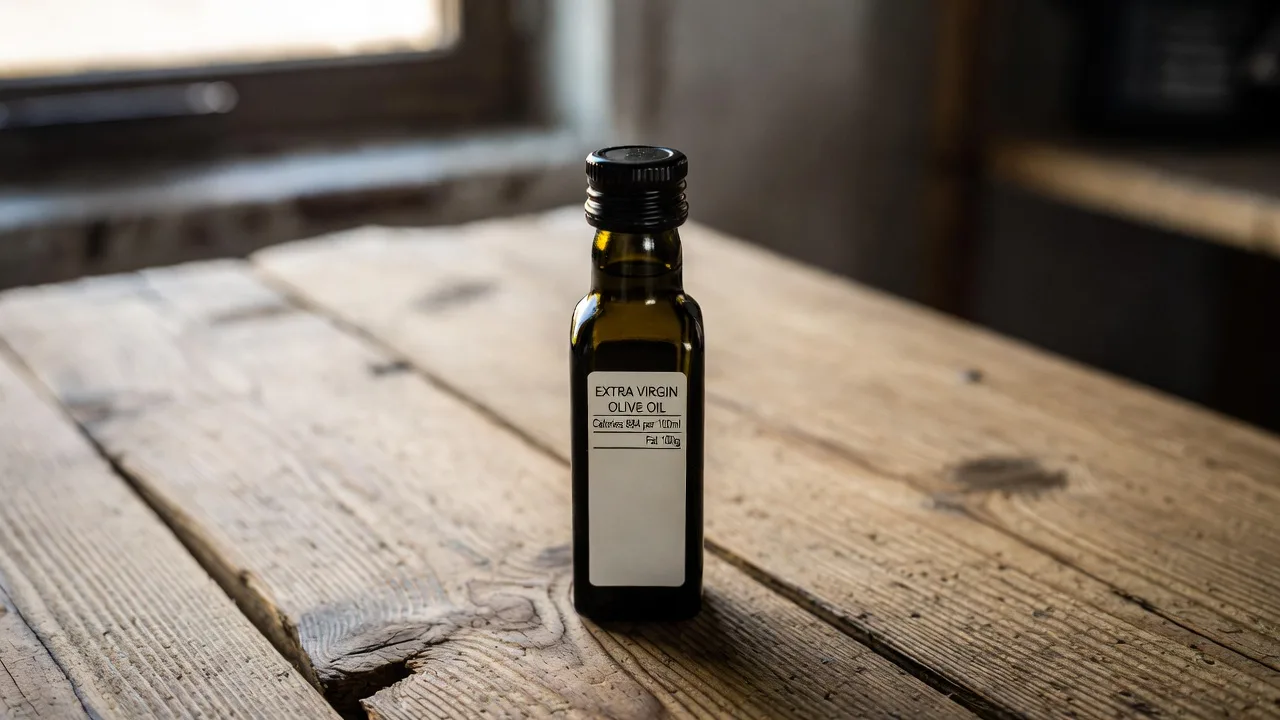
Calories in extra virgin olive oil total 119 per tablespoon (15ml) and 884 per 100ml. Every single calorie comes from fat — olive oil contains zero protein, zero carbohydrates, and zero sugar. Those numbers are identical to every other cooking oil on the market. But the calories in extra virgin olive oil are fundamentally different from the calories in soybean oil, canola oil, or butter — because the type of fat, the micronutrient payload, and the metabolic effects are not comparable. Here's the complete breakdown according to the USDA FoodData Central database.
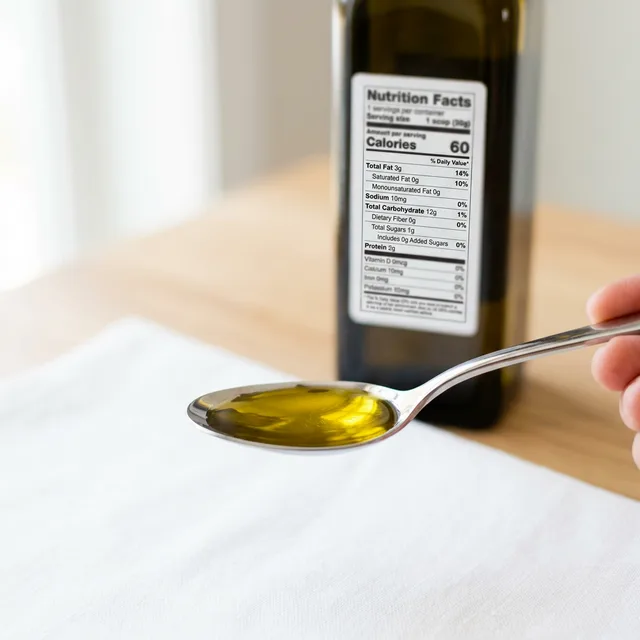
Calories in Extra Virgin Olive Oil: By Serving Size
- 1 teaspoon (5ml): 40 calories, 4.5g fat
- 1 tablespoon (15ml): 119 calories, 13.5g fat
- 2 tablespoons (30ml): 238 calories, 27g fat — the PREDIMED-recommended daily dose
- 1/4 cup (60ml): 477 calories, 54g fat
- 100ml: 884 calories, 100g fat
- 1 cup (240ml): 1,909 calories, 216g fat
The calories in extra virgin olive oil are calorie-dense — it's pure fat. But calorie density doesn't equal health risk. Almonds (576 cal/100g), salmon (208 cal/100g), and avocados (160 cal/100g) are also calorie-dense foods that improve health outcomes when consumed regularly. EVOO belongs in the same category: nutrient-dense calories that earn their place in your diet.
Calories in Extra Virgin Olive Oil: Full Macro Breakdown
Per tablespoon (15ml/13.5g) of extra virgin olive oil:
- Total fat: 13.5g (100% of calories)
- Monounsaturated fat (oleic acid): 9.9g (73%) — the dominant healthy fat
- Saturated fat: 1.9g (14%) — primarily palmitic acid
- Polyunsaturated fat: 1.4g (10%) — includes omega-6 and omega-3
- Trans fat: 0g
- Cholesterol: 0mg
- Protein: 0g
- Carbohydrates: 0g
- Fiber: 0g
- Sugar: 0g
The calories in extra virgin olive oil are dominated by monounsaturated fat — specifically oleic acid (omega-9). This is the fatty acid responsible for EVOO's cardiovascular benefits, insulin sensitivity improvements, and anti-inflammatory effects documented in the PREDIMED trial.
Calories in Extra Virgin Olive Oil vs. Other Oils
All cooking oils contain roughly the same calories in extra virgin olive oil has — because all oils are nearly 100% fat. The difference is in fat composition and micronutrients:
- Extra virgin olive oil: 119 cal/tbsp — 73% MUFA, high polyphenols, vitamin E, squalene
- Coconut oil: 121 cal/tbsp — 82% saturated fat, minimal micronutrients
- Canola oil: 124 cal/tbsp — 63% MUFA, zero polyphenols (refined)
- Soybean oil: 120 cal/tbsp — 24% MUFA, 58% omega-6 (pro-inflammatory ratio)
- Butter: 102 cal/tbsp — 63% saturated fat, cholesterol, some vitamin A
- Avocado oil: 124 cal/tbsp — 71% MUFA, fewer polyphenols than EVOO
Calorie-for-calorie, the calories in extra virgin olive oil deliver the most bioactive compounds. A tablespoon of EVOO contains oleocanthal (anti-inflammatory), hydroxytyrosol (antioxidant), oleuropein (cardioprotective), vitamin E (14% DV), vitamin K (7% DV), and squalene (skin-protective). No other cooking oil matches this micronutrient density per calorie.
Do the Calories in Extra Virgin Olive Oil Cause Weight Gain?
This is the question behind the question. People searching "calories in extra virgin olive oil" are usually concerned about weight management. The science is clear and somewhat counterintuitive.
The PREDIMED trial result: Participants consuming 50ml+ of EVOO daily (approximately 400 extra calories) did NOT gain more weight than control groups over 5 years. The WHO acknowledges that MUFA-rich diets do not promote obesity when they replace other fat sources.
Satiety effect: The calories in extra virgin olive oil are highly satiating. Oleic acid triggers the release of oleoylethanolamide (OEA) in the small intestine — a compound that signals fullness to the brain. Research published in the National Library of Medicine shows that meals containing EVOO produce stronger and longer-lasting satiety signals than equivalent-calorie meals using other fats. You eat less food overall because the olive oil keeps you satisfied longer.
Thermic effect: Monounsaturated fats have a slightly higher thermic effect than saturated fats — meaning your body burns marginally more energy metabolizing the calories in extra virgin olive oil compared to the same calories from butter or coconut oil. The difference is small (2-3%) but compounds over months of daily consumption.
Metabolic benefits: The calories in extra virgin olive oil improve insulin sensitivity, reduce fasting blood glucose, and lower triglycerides — all of which favor fat oxidation over fat storage. The same calories from refined soybean oil don't deliver these metabolic advantages.
Calories in Extra Virgin Olive Oil: Daily Intake Recommendations
How many calories in extra virgin olive oil should you consume daily? Research supports 2-4 tablespoons (238-477 calories) as the optimal range.
Minimum effective dose: 1 tablespoon (119 calories) — enough to meet the EFSA health claim threshold for polyphenol benefits if using high-polyphenol EVOO.
PREDIMED dose: 4+ tablespoons (477+ calories) — the dose used in the landmark trial that demonstrated 30% cardiovascular event reduction. This is substantial caloric intake and works best when EVOO replaces other fats rather than being added on top of an existing diet.
Practical sweet spot: 2-3 tablespoons (238-357 calories) — achievable for most people through normal cooking and finishing: one tablespoon for cooking, one for salad dressing, one for drinking straight or drizzling on finished dishes.
How to Fit the Calories in Extra Virgin Olive Oil into Your Diet
The calories in extra virgin olive oil are easiest to manage when EVOO replaces existing fat sources rather than being consumed in addition to them.
Replace butter: Swap butter for EVOO in cooking and baking where appropriate. One tablespoon of butter (102 cal, 7g saturated fat) replaced with one tablespoon of EVOO (119 cal, 1.9g saturated fat) adds only 17 calories while dramatically improving your fat quality.
Replace seed oils: If you currently cook with soybean oil, corn oil, or sunflower oil, switching to EVOO doesn't change your calorie intake (they're nearly identical) but replaces pro-inflammatory omega-6 dominant fats with anti-inflammatory oleic acid and polyphenols.
Replace commercial dressings: Most commercial salad dressings contain soybean oil, sugar, and artificial ingredients. A simple lemon-olive oil vinaigrette delivers fewer processed ingredients and more beneficial fats for similar or fewer calories.
Replace mayonnaise: Standard mayo (94 cal/tbsp, soybean oil base) replaced with an EVOO drizzle on sandwiches and dips adds slightly more calories but vastly superior fat quality.
Calories in Extra Virgin Olive Oil vs. Other Grades
All grades of olive oil contain the same calories. The calories in extra virgin olive oil are identical to regular olive oil, light olive oil, and pomace olive oil — 119 per tablespoon. The difference is entirely in quality, not calorie content:
- Extra virgin (EVOO): 119 cal — highest polyphenols, cold-pressed, best flavor, lowest acidity (<0.8%)
- Virgin olive oil: 119 cal — slightly lower quality, acidity up to 2%, fewer polyphenols
- Regular/"pure" olive oil: 119 cal — blend of refined and virgin, minimal polyphenols, neutral flavor
- Light olive oil: 119 cal — refined, very low polyphenols, mild flavor (the "light" refers to taste, not calories)
- Pomace olive oil: 119 cal — solvent-extracted from olive pulp, lowest quality, industrial use
The widespread confusion about "light" olive oil is worth addressing specifically. "Light" olive oil has the same calories in extra virgin olive oil has — 119 per tablespoon. The "light" label refers to lighter color and flavor, NOT fewer calories. This misleads health-conscious consumers into choosing a nutritionally inferior product thinking they're reducing calorie intake. They're not — they're just losing the polyphenols and flavor.
Calories in Extra Virgin Olive Oil: Tracking and Measuring
If you track macros or count calories, accurate olive oil measurement matters:
- Measuring spoons: Level tablespoon = 15ml = 119 calories. Heaped tablespoon adds 30-50% more — potentially 150-175 calories.
- Kitchen scale: Most accurate method. 13.5g of olive oil = 1 tablespoon = 119 calories. Weigh your pour until you can eyeball it consistently.
- Pour from bottle: A 3-second pour from a standard olive oil bottle delivers approximately 1 tablespoon. Use a bottle with a pour spout for consistency.
- Cooking absorption: Not all oil used in cooking is consumed. Pan-frying absorbs approximately 30-50% of the oil used. Roasting absorbs 20-30%. Deep frying absorbs 8-15%. Factor this into your calorie tracking — if you use 2 tablespoons for sautéing but eat only 60% of the oil, you consumed ~143 calories from olive oil, not 238.
Calories in Extra Virgin Olive Oil: The Bottom Line
The calories in extra virgin olive oil are real — 119 per tablespoon, 100% from fat. But these are among the most health-productive calories available in any food. Every tablespoon delivers oleic acid for cardiovascular health, polyphenols for antioxidant protection, oleocanthal for anti-inflammatory defense, and satiety signals that reduce total calorie intake elsewhere. Don't avoid olive oil because of its calorie count. Replace inferior fats with it. Use 2-3 tablespoons of quality cold-pressed EVOO daily. Track it honestly if you're counting. And stop worrying about calories from the single healthiest fat source in the Mediterranean diet.