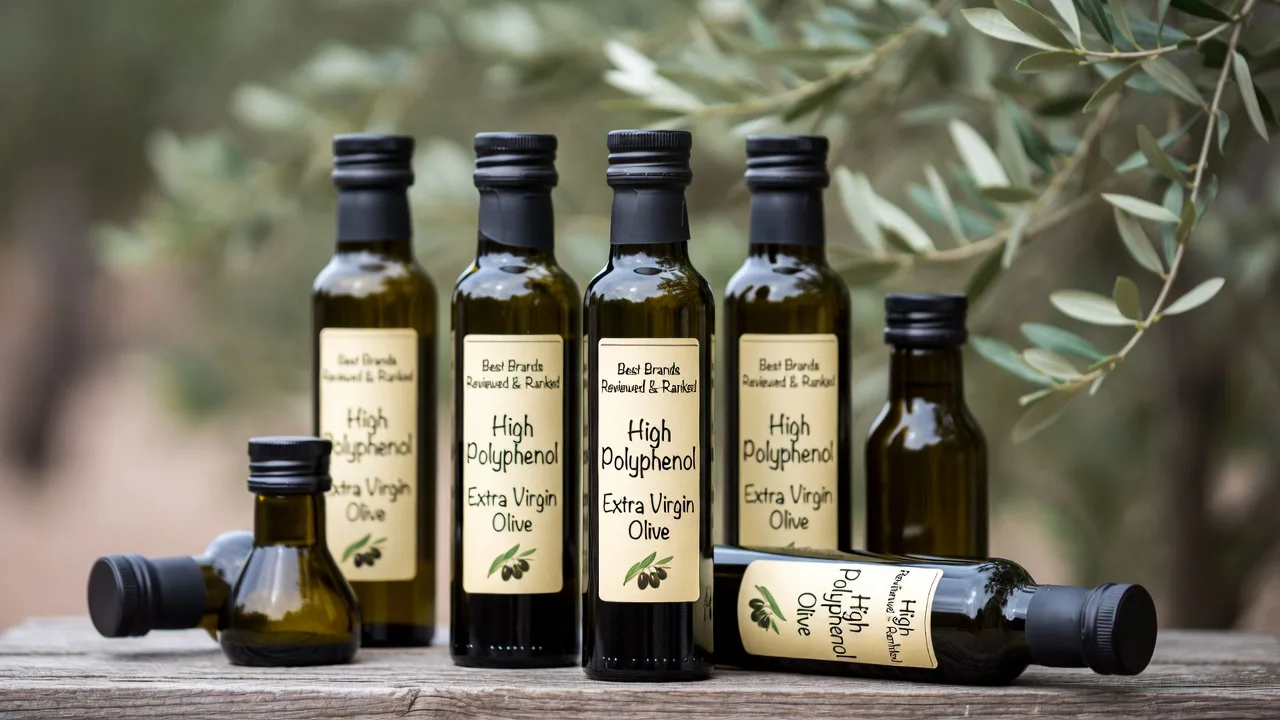
High polyphenol extra virgin olive oil is where health claims meet measurable science. Polyphenol levels range from 50mg/kg in supermarket bottles to 1,000+ mg/kg in premium oils — a 20x difference. The EU approved a health claim at 250mg/kg. This guide ranks the best brands, explains what drives polyphenol content, and helps you pick oils that deliver real health benefits.
What Are Polyphenols & Why Do They Matter?
Polyphenols are bioactive plant compounds found in cold-pressed extra virgin olive oil. The primary polyphenols in EVOO include oleocanthal (the compound responsible for the distinctive throat-catching peppery sensation — it's actually a natural anti-inflammatory with potency comparable to ibuprofen), oleacein (a powerful antioxidant that protects LDL cholesterol from oxidation), hydroxytyrosol (one of the most potent natural antioxidants known to science, with an ORAC value 10x higher than green tea), and oleuropein (anti-inflammatory, antimicrobial, and cardioprotective).
The European Food Safety Authority (EFSA) has approved a specific health claim: olive oils containing at least 250mg/kg of polyphenols can state they "contribute to the protection of blood lipids from oxidative stress." This threshold of 250mg/kg is the minimum for health benefits — the best oils on the market deliver 2-4x this amount. Research from the National Library of Medicine continues to reveal new health benefits of olive oil polyphenols, including neuroprotective effects and cancer-preventive properties.
What Determines Polyphenol Content?
Olive Variety — The Genetic Factor
Different olive cultivars produce dramatically different polyphenol levels. The highest-polyphenol varieties include:
- Coratina (Puglia, Italy) — 500-1,000+ mg/kg. The polyphenol champion. Intensely bitter and peppery.
- Koroneiki (Greece) — 400-900 mg/kg. The backbone of Greek olive oil, known for robust fruity flavors.
- Picual (Spain) — 300-600 mg/kg. Spain's most important variety, with excellent stability and bold character.
- Moraiolo (Tuscany, Italy) — 300-500 mg/kg. Classic Tuscan variety with herbaceous notes.
- Chemlali (Tunisia) — 200-500 mg/kg. North Africa's heritage variety.
- Arbequina (Spain/California) — 100-300 mg/kg. Mild and buttery, lower polyphenols but excellent for cooking and baking.
- Frantoio (Italy) — 200-500 mg/kg. Balanced Tuscan variety with fruity, grassy character.
Harvest Timing
Early harvest (green) olives contain 3-5x more polyphenols than late harvest (ripe/black) olives. The polyphenol concentration decreases as the olive matures and converts bitter compounds into milder oils. Premium producers intentionally harvest early, sacrificing oil yield (early olives produce less oil per kilogram) for maximum health compounds. Look for "Early Harvest" or "Green Harvest" on labels as an indicator of high-quality production.
Growing Conditions & Processing
Altitude (higher is better — mountain-grown olives produce more polyphenols), water stress (rain-fed trees in dry conditions concentrate polyphenols), extraction method (two-phase centrifugal preserves the most polyphenols), malaxation time (shorter preserves more), and storage conditions (dark, cool, sealed) all affect the final polyphenol count.
Best High-Polyphenol Olive Oil Brands
1. Papa Vince — Sicilian Heritage
Papa Vince produces a single-estate, early-harvest EVOO from Sicily, Italy, using Nocellara del Belice olives that are stone-crushed within hours of picking. Polyphenol content typically ranges 400-600mg/kg. The oil is unfiltered, cold extracted, and packaged in UV-protective dark glass. Flavor profile: intense green fruit, tomato leaf, artichoke, with a robust peppery finish. Best for: daily drinking, finishing dishes, and salad dressings. Papa Vince is available on Amazon and their direct website, typically priced at $25-35 per 500ml.
2. Barbera — Puglian Excellence
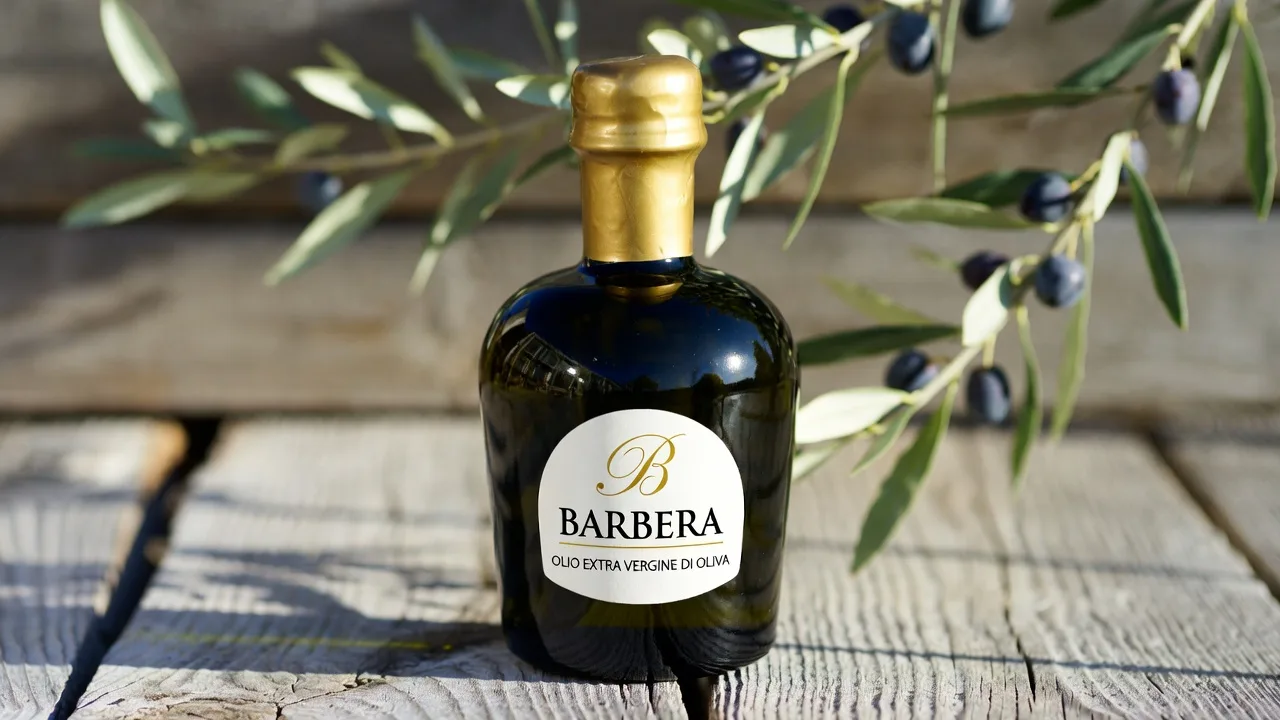
The Barbera family has produced olive oil in Puglia, southern Italy, since 1894 — four generations of expertise. Their flagship "Lorenzo" line uses Coratina and Peranzana olives, achieving polyphenol levels of 500-800mg/kg in early harvest vintages. Flavor profile: bold bitterness, strong peppery kick, green almond, and fresh grass. Best for: health-focused consumers, robust Mediterranean dishes, and pasta finishing. The brand is well-distributed in US specialty food stores and online retailers. Price point: $20-40 per 500ml.
3. Terra Creta — Cretan Tradition
Terra Creta produces award-winning Koroneiki-variety EVOO from the Kolymvari region of Crete, Greece — one of the world's oldest olive-growing areas. Their "Grand Cru" early harvest bottling consistently achieves 500-700mg/kg polyphenols. Flavor profile: green banana, fresh herbs, tomato, with bright peppery notes. The brand has won multiple awards at the NYIOOC World Olive Oil Competition. Best for: daily consumption, Greek salads, and raw applications. Price: $18-30 per 500ml.
4. Galantino — Five Generations of Puglian Craft
The Galantino family produces premium Coratina olive oil from their groves in Bisceglie, Puglia. Their "Il Frantoio" monovarietal Coratina regularly tests at 600-900mg/kg polyphenols — among the highest available commercially. Flavor profile: extremely intense bitterness, powerful pepperiness, green leaf, and herbaceous complexity. Best for: health enthusiasts who can handle bold flavors, high-heat cooking (polyphenols provide exceptional heat stability). Price: $25-45 per 500ml.
5. Carapelli — Accessible Italian Quality
One of Italy's largest olive oil producers, Carapelli offers a range from everyday cooking oils to premium single-origin bottlings. Their "Oro Verde" early harvest line achieves 300-450mg/kg polyphenols at a more accessible price point. Flavor profile: balanced fruity character, moderate bitterness and pungency. Best for: daily cooking and those transitioning from mild oils to more robust EVOOs. Widely available in US supermarkets. Price: $12-20 per 500ml.
6. Lucini Italia — California-Italian Fusion
Lucini sources olives from select Italian estates and bottles for the American market, emphasizing transparency and quality testing. Their "Premium Select" line achieves 250-400mg/kg polyphenols. Flavor profile: medium intensity, fruity and approachable, mild bitterness. Best for: everyday cooking, salads, and finishing. Well-distributed in US natural food stores. Price: $15-25 per 500ml.
7. Morocco Gold — Moroccan Heritage
Morocco Gold produces Picholine-variety EVOO from the Beni Mellal region of Morocco, at altitudes around 600-700 meters. Lab-tested polyphenol content of 350-500mg/kg — proving that North African oils compete with the best Mediterranean producers. Flavor profile: green apple, fresh almond, moderate pungency, with a clean finish. Best for: daily drinking and health-focused consumption. Available direct-to-consumer and in UK specialty stores. Price: $22-35 per 500ml.
8. Frantoia — Sicilian Award Winner
Produced by the Ferreri family in western Sicily, Frantoia is a blend of Nocellara del Belice, Biancolilla, and Cerasuola varieties. This blending approach creates complex flavor profiles while maintaining polyphenol levels of 300-500mg/kg. Flavor profile: green tomato, artichoke, almond, with balanced pepperiness. Best for: versatile kitchen use, from pasta to grilling. Price: $18-28 per 500ml.
How to Verify Polyphenol Content
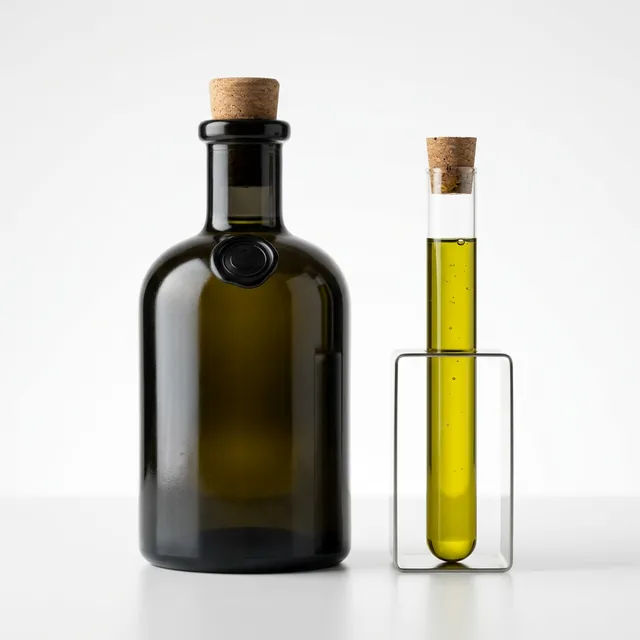
Don't trust marketing claims alone. To verify polyphenol content, look for lab certificates of analysis (COA) — reputable producers provide these on their websites or upon request. The IOC-approved testing method measures total phenolic content using the Folin-Ciocalteau assay, expressed in mg/kg of tyrosol equivalents. Third-party competitions like the NYIOOC World Olive Oil Competition and BIOL International Prize also validate quality through rigorous judging.
Polyphenol Degradation: How Oil Loses Its Benefits
Polyphenol content is not static — it decreases over time and with improper handling. Studies show that EVOO loses 20-40% of its polyphenols within 12 months, even under ideal storage. Light exposure accelerates degradation dramatically — oil in clear glass on a sunny shelf can lose 50%+ of polyphenols within 3 months. This is why proper bottle selection and storage is crucial. Always choose dark containers, store cool and sealed, and use your premium EVOO within 6-12 months of harvest.
Price vs. Quality: What Should You Spend?
Genuine high-polyphenol EVOO costs $20-50 per 500ml at retail. This may seem expensive compared to $8 supermarket bottles, but the comparison is misleading — most cheap EVOOs test below 150mg/kg polyphenols and often fail basic quality standards. At 1-2 tablespoons per day for daily health consumption, a 500ml bottle lasts approximately 3-4 weeks, making the daily cost $0.70-$1.70. That's less than a cup of coffee for a scientifically validated cardiovascular protector.
The "Cough Test" — A Quick Quality Check
Oleocanthal — the primary anti-inflammatory polyphenol in EVOO — activates TRPA1 receptors in the throat, causing a distinctive peppery, cough-inducing sensation. High-polyphenol oils will make you cough when you taste them straight. If an EVOO produces zero throat irritation, it likely has low polyphenol content regardless of what the label claims. This simple "cough test" is used by professional olive oil tasters worldwide and correlates strongly with lab-measured polyphenol levels.
The Playbook
Early-harvest Coratina, Koroneiki, or Picual from established regions. Dark container, sealed tight, used within 12 months. Minimum 1.5 tablespoons daily. If it doesn't make you cough, it's not high-polyphenol. That's the entire playbook.