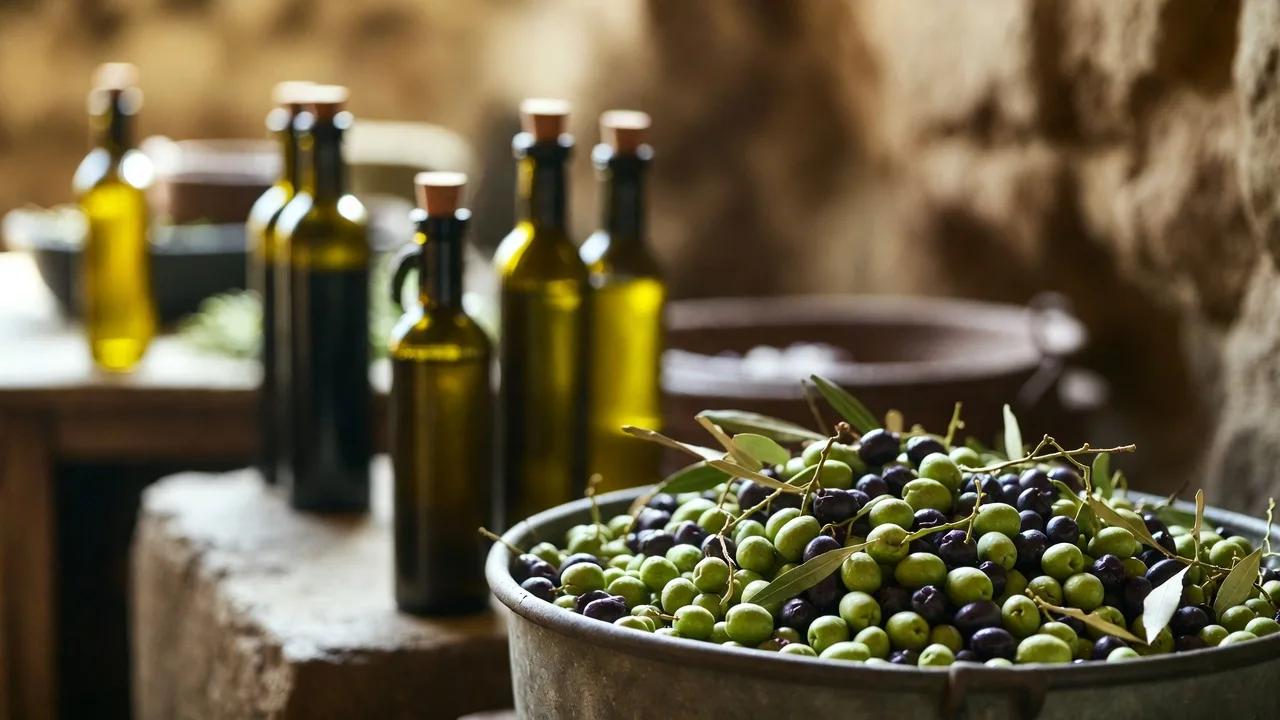
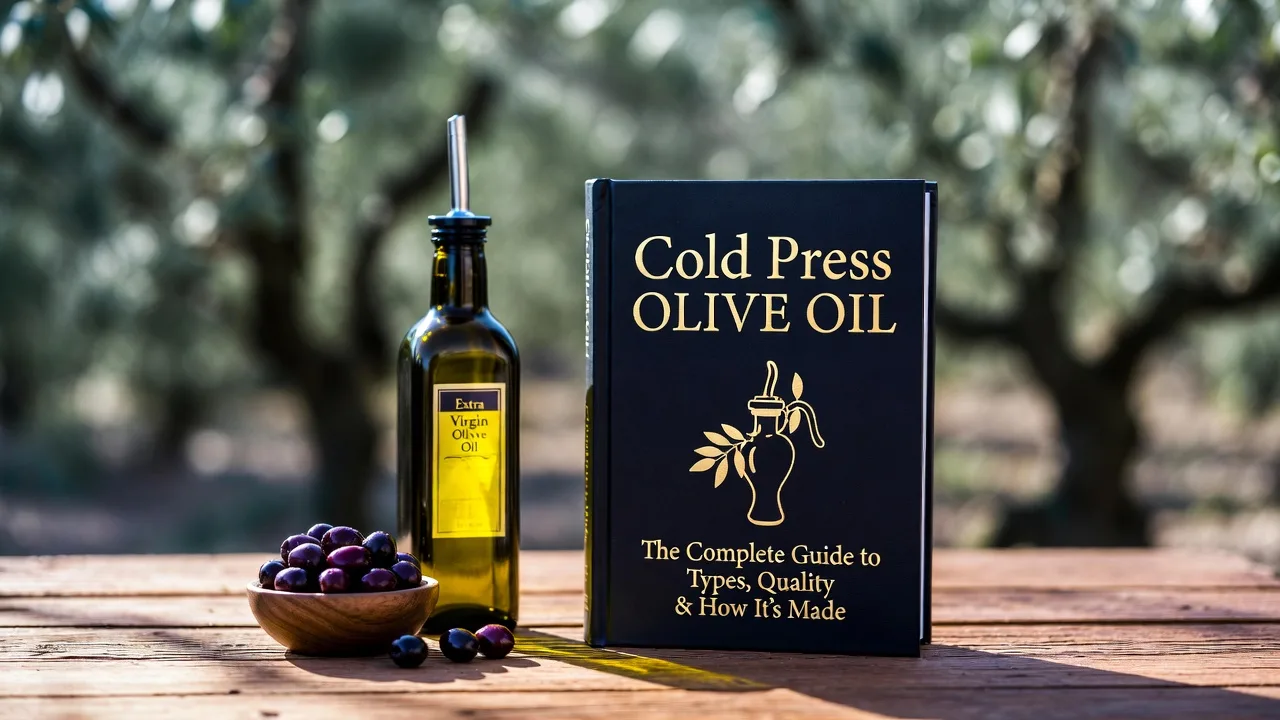
Cold press olive oil is olive oil done right — mechanically extracted from fresh olives below 27°C, no chemicals, no shortcuts. Every polyphenol, antioxidant, and flavor compound survives the process. This guide takes you inside the mill, breaks down every grade and type, and shows you exactly how to spot genuinely high-quality EVOO vs. marketing hype.
What Does "Cold Pressed" Actually Mean?
The term cold pressed refers to olive oil extracted at temperatures below 27°C (80.6°F). This temperature threshold is regulated by the International Olive Council (IOC) and the European Union regulations. Heat accelerates extraction (producing more oil per kilogram of olives) but degrades the delicate phenolic compounds, volatile aromatics, and antioxidants that give extra virgin olive oil its distinctive character.
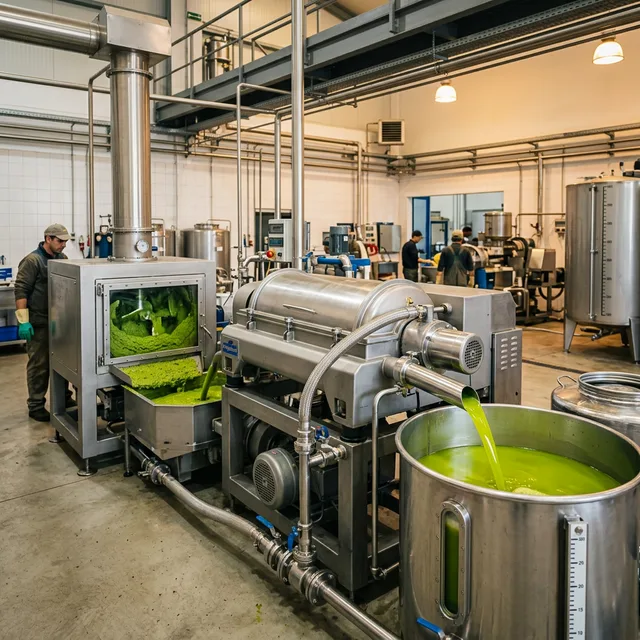
Modern "cold pressed" is technically a misnomer — most producers today use centrifugal extraction systems rather than traditional stone presses. The accurate term is cold extracted, meaning the process never exceeds 27°C regardless of the mechanical method used. Traditional stone mill pressing is still practiced in small artisanal operations across Greece, Italy, Spain, and North Africa, primarily for heritage and marketing appeal. The Olive Oil Times notes that centrifugal extraction actually produces higher-quality oil because it reduces oxidation exposure.
Cold Pressed vs Cold Extracted vs Refined: Side-by-Side Comparison
Here's how the three main production methods differ on every quality metric that matters:
| Feature | Cold Pressed | Cold Extracted | Refined Olive Oil |
|---|---|---|---|
| What it means | Stone/hydraulic press, below 27°C | Centrifugal system, below 27°C | Chemically/thermally treated to remove defects |
| Max temperature | 27°C (80.6°F) | 27°C (80.6°F) | 240°C+ during deodorization |
| Polyphenols preserved | Yes — fully | Yes — fully (often higher than stone press) | No — stripped by heat/chemicals |
| Flavor | Fruity, bitter, peppery | Fruity, bitter, peppery | Neutral, bland |
| Smoke point | 190–215°C (375–420°F) | 190–215°C (375–420°F) | 240°C (465°F) |
| Can it be labeled EVOO? | Yes, if defect-free & FFA <0.8% | Yes, if defect-free & FFA <0.8% | No — sold as "olive oil" or "light olive oil" |
| Health benefits | High — polyphenols intact | High — polyphenols intact | Low — only monounsaturated fats remain |
| Common label wording | "First cold pressed", "cold pressed" | "Cold extracted", "extracted below 27°C" | "Pure olive oil", "light olive oil", "olive oil" |
| Best used for | Finishing, dressings, raw use | Finishing, cooking, daily health use | High-heat frying, neutral applications |
Bottom line: Cold pressed and cold extracted are equally good — both preserve polyphenols and qualify as EVOO. The label difference is about the machine used, not quality. Refined olive oil is a fundamentally different product. When a bottle says "cold pressed," don't assume it's superior to one that says "cold extracted" — they're both the real thing.
The Production Process: From Olive to Oil
Step 1: Harvesting
Timing is everything. Olives harvested early (green) produce more bitter, peppery, polyphenol-rich oil with lower yield. Late-harvested (black) olives produce milder, butterier oil with higher yield but fewer antioxidants. Most premium producers pick during the transitional "veraison" stage — when olives are turning from green to purple — to balance flavor complexity with adequate yield. Early harvest oils can contain 3-5x more polyphenols than late-harvest oils, according to studies published in the Journal of Food Chemistry.
The harvesting method also matters. Hand-picking and gentle mechanical raking preserve olive integrity, while aggressive machine harvesting can bruise fruit and initiate oxidation before milling. In Puglia, Italy, and across Crete, Greece, many premium groves still harvest by hand or with gentle vibratory systems — a labor of love that directly translates to higher quality oil.
Step 2: Washing & Leaf Removal
Fresh olives are washed to remove dirt, twigs, and leaves, then fed into the defoliator. Some producers leave a small percentage of leaves intentionally — they add a greenish color and grassy notes. However, excessive leaf matter can introduce bitterness and chlorophyll instability. The best practice is 95-98% leaf removal for a balanced flavor profile.
Step 3: Crushing / Milling
The olives — pits and all — are crushed into a paste. Traditional granite stone mills rotate slowly (15-20 RPM), producing minimal heat but requiring longer processing time. Modern hammer mills or blade mills process faster but must be calibrated to avoid generating frictional heat above 27°C. The pit fragments are integral to the process — they contain enzymes that aid in oil release and add fibrous structure to help separate oil from water.
Step 4: Malaxation (Kneading)
The olive paste is slowly kneaded in a malaxer for 20-45 minutes. This critical step allows tiny oil droplets to coalesce into larger droplets that can be separated. Temperature must remain below 27°C. Longer malaxation increases yield but can reduce polyphenol content through enzymatic degradation. Master millers balance this tradeoff based on the olive variety — robust varieties like Coratina and Koroneiki can handle longer malaxation because they start with exceptionally high polyphenol levels.
Step 5: Extraction (Pressing or Centrifugation)
In traditional pressing, the olive paste is spread on fiber discs (fiscoli), stacked, and hydraulically pressed to squeeze out the oil-water mixture. In modern two-phase or three-phase centrifugal systems, the paste spins at high speed to separate oil from water and solids. Two-phase systems use less water and produce oil with higher polyphenol content — they're the gold standard for premium high-polyphenol EVOOs.
Step 6: Separation & Settling
The resulting oil-water mixture passes through a vertical centrifuge to separate pure oil from vegetation water. The oil may be filtered (removing sediment particles for a clear, shelf-stable product) or left unfiltered (retaining microscopic particles that add body and flavor complexity but reduce shelf life). Both approaches have merit — unfiltered oils shine in immediate use, while filtered oils maintain quality longer in proper storage containers.
Understanding Olive Oil Grades & Types
Extra Virgin Olive Oil (EVOO)
The highest grade. Must be cold extracted with zero defects in flavor (no rancidity, mustiness, or fermentation off-notes) and free fatty acid content below 0.8%. The IOC requires that EVOO pass both chemical analysis AND sensory evaluation by a trained tasting panel. True EVOO should taste fruity, with some combination of bitterness and pungency — these are signs of healthy polyphenols. This grade is ideal for cooking, finishing, and raw applications.
Virgin Olive Oil
Also cold extracted and mechanically produced, but with slightly higher free fatty acid content (up to 2.0%) and minor sensory defects permitted. Virgin olive oil is still a good product — it retains beneficial compounds and honest olive flavor — but lacks the pristine quality of EVOO. It's excellent for everyday cooking and frying.
Refined Olive Oil
Virgin olive oil that has been chemically refined to remove defects — using activated carbon, alkali treatments, or high-temperature deodorization. Refining strips away flavor, color, and most polyphenols but produces a neutral, high-smoke-point oil (240°C/465°F) suitable for high-heat cooking. Refined olive oil is often blended with a small percentage of EVOO and sold as "olive oil" or "pure olive oil."
Pomace Olive Oil
Extracted from the leftover olive pulp (pomace) using chemical solvents, then refined. Pomace oil is the lowest grade — it retains the monounsaturated fat profile of olive oil but has virtually no polyphenols, antioxidants, or flavor character. It should never be labeled or marketed as "olive oil" without the "pomace" qualifier. It's primarily used for industrial food production and soap making.
Polyphenol Levels: The Quality Indicator
Polyphenols are the bioactive compounds that give olive oil its health benefits, peppery bite, and oxidative stability. The EU health claim threshold is 250mg/kg — oils above this level can legally claim cardiovascular health benefits. Premium high-polyphenol EVOOs reach 500-1,000+ mg/kg. Factors affecting polyphenol content include olive variety (Coratina, Koroneiki, and Picual are naturally highest), harvest timing (early is higher), irrigation (rain-fed is higher), altitude (higher is better), and extraction method (two-phase centrifugal preserves the most).
Research from the European Food Safety Authority (EFSA) confirms that olive oil polyphenols contribute to the protection of blood lipids from oxidative stress — this was the foundation for the EU's 2012 health claim regulation. To verify polyphenol content, look for lab-tested certifications on the label or contact the producer directly. The International Olive Council maintains testing standards for polyphenol quantification.
How to Identify Quality: Reading the Label
Learning to read an olive oil label separates the educated buyer from the marketing victim. Here's what to look for:
- Harvest date — the single most important indicator. Oil should be consumed within 18 months of harvest. A production or bottling date is less useful because oil may sit in tanks for months before bottling.
- "Cold pressed" or "cold extracted" — confirms mechanical extraction below 27°C.
- Origin specificity — single-estate or single-region origin (e.g., "Puglia, Italy" or "Sitia, Crete") indicates traceability. "Packed in Italy" does NOT mean the olives are Italian — they may be imported from Tunisia, Spain, or Greece and merely bottled in Italy.
- Variety — named cultivars (Arbequina, Coratina, Hojiblanca) indicate a producer who cares about their product.
- DOP/PDO and IGP/PGI certifications — European Protected Designation of Origin guarantees geographic specificity and quality standards.
- Polyphenol or oleic acid content — increasingly listed on premium bottles.
- Dark bottle — quality producers use dark glass, tin, or ceramic containers because UV light rapidly degrades olive oil quality.
Smoke Points by Olive Oil Type
Understanding smoke points helps you choose the right oil for each cooking technique:
- Extra Virgin Olive Oil: 190-215°C (375-420°F) — sautéing, pan-frying, baking, roasting, finishing
- Virgin Olive Oil: 195-210°C (383-410°F) — general cooking, frying
- Refined Olive Oil / "Light" Olive Oil: 240°C (465°F) — deep-frying, high-heat searing, stir-frying
- Pomace Olive Oil: 238°C (460°F) — industrial frying (not recommended for home use)
Modern research overwhelmingly supports using EVOO for cooking — the American Heart Association classifies it as a heart-healthy cooking oil. The polyphenols in EVOO actually provide additional heat stability beyond what the smoke point alone suggests. Combined with proper cooking techniques, EVOO is the most stable cooking fat available.
Common Olive Varieties & Their Characteristics
Different olive cultivars produce dramatically different oils:
- Arbequina (Spain) — mild, buttery, low bitterness. Perfect for baking and delicate dishes. Polyphenols: 100-300 mg/kg.
- Picual (Spain) — robust, peppery, high stability. Spain's most important variety. Polyphenols: 300-600 mg/kg.
- Koroneiki (Greece) — intensely fruity and peppery, very high polyphenol content. The backbone of Greek olive oil. Polyphenols: 400-900+ mg/kg.
- Coratina (Italy) — extremely pungent and bitter with the highest polyphenol potential. Grown primarily in Puglia. Polyphenols: 500-1,000+ mg/kg.
- Frantoio (Italy) — balanced, fruity, medium pungency. Classic Tuscan variety. Polyphenols: 200-500 mg/kg.
- Hojiblanca (Spain) — mild, slightly sweet, low bitterness. Beloved for table olives and gentle oils.
- Picholine (France/Morocco) — grassy, artichoke-like, with elegant bitterness. Popular in Provence and North African production.
Fraud in the Olive Oil Industry
The olive oil industry has a well-documented fraud problem. A UC Davis study found that 69% of imported EVOOs sold in US supermarkets failed to meet IOC/USDA standards for extra virgin grade. Common frauds include blending EVOO with cheaper refined olive oil, mixing with seed oils (especially hazelnut or sunflower), mislabeling country of origin, and selling old, expired oil as fresh.
To protect yourself, buy from reputable producers with traceable supply chains, look for third-party certifications (COOC in California, DOP in Europe), and trust your senses — genuine EVOO should taste fruity, bitter, and peppery. A "greasy" or "flat" taste indicates a refined or degraded oil. Our brand review guide helps you identify trustworthy producers.
Storing Cold-Pressed Olive Oil
Even the finest cold-pressed EVOO degrades without proper storage. The three enemies of olive oil quality are light, heat, and oxygen. Store your oil in dark glass bottles, ceramic containers, or stainless steel tins — never in clear glass or plastic. Keep temperatures between 14-18°C (57-65°F). Seal tightly after each use to minimize oxygen exposure. Open bottles should be consumed within 3-6 months to maintain flavor and polyphenol integrity.
The Bottom Line
Buy cold extracted EVOO with a recent harvest date and a named origin. Store it in dark containers away from heat. Use it for cooking, daily health, or skincare. Quality starts in the grove and the mill — once you taste the difference, you won't go back.