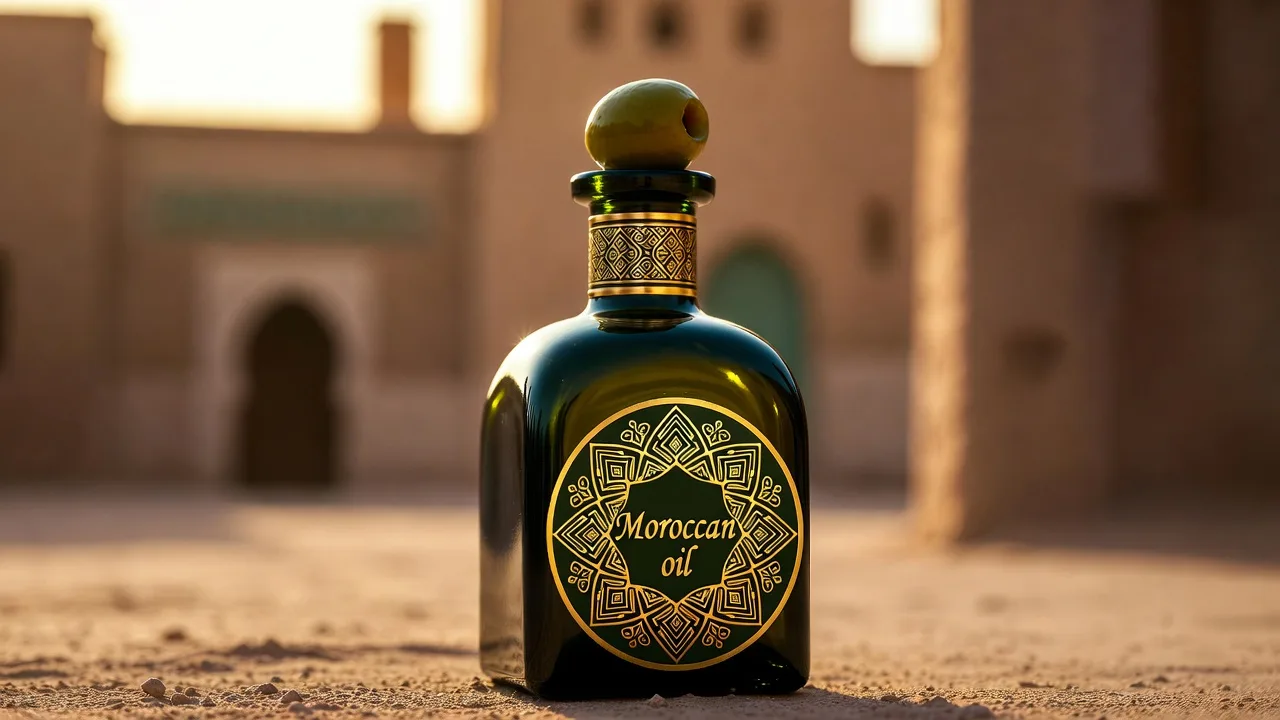
Moroccan oil olive is one of the Mediterranean's best-kept secrets. Morocco is the world's sixth-largest olive oil producer, with over 1 million hectares of olive groves stretching from the Rif Mountains to the Saharan edge. The country's unique terroir — hot days, cold nights, mineral-rich soils, and ancient Picholine Marocaine trees — produces oils with bold, complex flavors that rival anything from Spain, Italy, or Greece. Yet Moroccan oil olive remains dramatically undervalued on the global market. That gap is your buying opportunity.
Why Moroccan Oil Olive Stands Out
Three factors make Moroccan oil olive unique among Mediterranean producers.
Ancient varieties: The Picholine Marocaine dominates — representing 96% of Morocco's olive trees. This vigorous, drought-resistant variety has been cultivated in North Africa for over 2,000 years. It produces oil with a distinctive green-herbaceous character, moderate bitterness, and a peppery finish that signals high polyphenol content. Lesser-known varieties include Haouzia, Menara, and Dahbia — each producing oils with subtly different flavor profiles.
Extreme terroir: Morocco's olive-growing regions span dramatic climate zones. The Meknès-Fès corridor in the north produces the country's most refined oils — cool winters and fertile plains create complex, balanced profiles. The Marrakech-Haouz region, squeezed between the Atlas Mountains and the Sahara, produces intensely flavored oils with robust bitterness. The Souss-Massa region in the south, where olive groves neighbor argan forests, produces Morocco's most unique dual-oil culture.
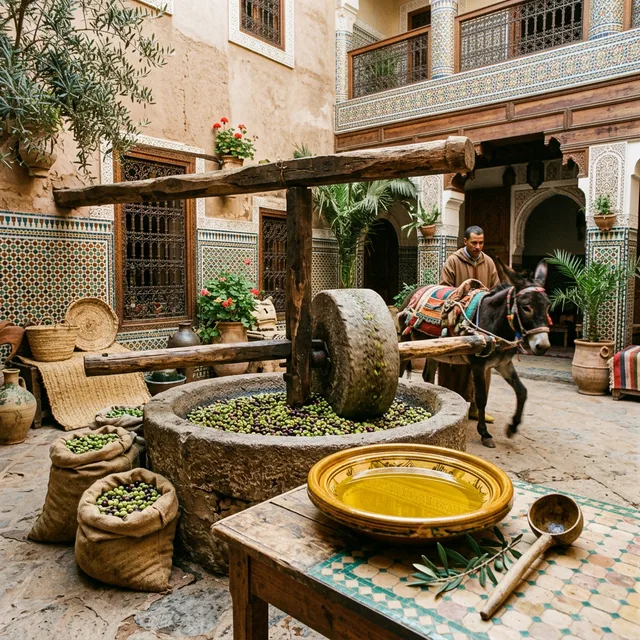
Traditional production: Many Moroccan cooperatives still use granite millstones for crushing — a traditional cold extraction method that produces distinctive flavors impossible to replicate with modern centrifugal equipment. The FAO has invested heavily in modernizing Morocco's olive sector while preserving these artisanal traditions.
Moroccan Oil Olive Regions: A Terroir Map
Meknès-Fès: The Premium Belt
The Meknès-Fès region produces Morocco's highest-quality Moroccan oil olive. The ancient imperial city of Meknès sits in a fertile plain with clay-limestone soils, 400-600mm annual rainfall, and a continental climate with genuine cold winters. These conditions stress the trees just enough to produce oils with elevated polyphenol levels and complex aromatic profiles. Look for "Meknès" or "Volubilis" on labels — Volubilis, the ancient Roman olive oil city near Meknès, gives its name to several premium cooperatives.
Marrakech-Haouz: Bold and Intense
The Marrakech-Haouz region grows Moroccan oil olive under extreme conditions — brutal summer heat, cold Atlas Mountain winters, and minimal rainfall. The trees respond by concentrating their defense compounds into intensely flavored fruit. Oils from this region hit hard: strong bitterness, aggressive pepperiness, and herbaceous notes of artichoke and green almond. They're ideal for bold Mediterranean dishes — tagines, grilled meats, and harissa-spiced preparations.
Souss-Massa: The Argan-Olive Union
The Souss-Massa region around Agadir is where Morocco's olive groves and argan forests overlap. This unique geography has created a dual-oil culinary tradition found nowhere else on earth. Moroccan cooks in this region blend Moroccan oil olive with argan oil for dipping bread — the mild, fruity olive oil balances the nutty, toasty intensity of argan. Some producers now offer pre-blended olive-argan oils for export, though purists insist on blending at the table.
Oriental Region: The Rising Star
Eastern Morocco's Oriental region — around Oujda and the Algerian border — is expanding rapidly. New plantations using improved Picholine Marocaine clones and modern cold extraction equipment are producing Moroccan oil olive that competes at international competitions. The 2024 NYIOOC World Olive Oil Competition awarded multiple medals to Moroccan producers from this region.
Moroccan Oil Olive Health Benefits
Moroccan oil olive shares the same core health benefits as all quality extra virgin olive oil, with some unique advantages tied to the Picholine Marocaine variety.
High oleic acid content: Picholine Marocaine oil typically contains 65-75% oleic acid — the monounsaturated fat responsible for EVOO's cardiovascular benefits. The WHO recommends replacing saturated fats with monounsaturated fats to reduce cardiovascular disease risk.
Polyphenol richness: Early-harvest Picholine Marocaine from high-altitude groves produces oil with polyphenol levels exceeding 400mg/kg — well above the 250mg/kg threshold that qualifies for the EU health claim on olive oil polyphenols. Research from the National Library of Medicine documents significant anti-inflammatory and antioxidant activity from these phenolic compounds.
Vitamin E: Moroccan oil olive is notably rich in tocopherols (vitamin E), providing 15-25mg per 100ml. This natural antioxidant protects the oil from oxidation during storage and delivers skin-health benefits when consumed or applied topically.
Traditional medicinal use: Moroccan traditional medicine has used olive oil for centuries — as a morning digestive tonic (a tablespoon on an empty stomach), for skin and hair conditioning, wound healing, and infant massage. These ancient practices are increasingly supported by modern clinical evidence.
Moroccan Oil Olive in the Kitchen
Tagine with Moroccan Oil Olive
Tagine is Morocco's signature dish, and Moroccan oil olive is its foundation. The oil goes in first — heated gently with onions, garlic, ginger, saffron, and cumin before the protein (chicken, lamb, or fish) and vegetables are layered on top. The slow cooking allows the Moroccan oil olive to absorb and distribute the spice flavors throughout the dish. Use at least 3-4 tablespoons per tagine — Moroccan cooks are not shy with their oil. Finish with a drizzle of raw Moroccan oil olive for brightness.
Zaalouk: Smoky Eggplant Salad
Zaalouk is a smoky, spiced eggplant and tomato salad served across Morocco as a starter or side dish. Char whole eggplants over flame, peel, and chop roughly. Cook with crushed tomatoes, garlic, cumin, paprika, and a generous amount of Moroccan oil olive until thick and jammy. Serve warm or at room temperature with crusty bread and more Moroccan oil olive drizzled on top. The oil makes or breaks this dish — skip the low-quality stuff.
Bissara: Fava Bean Soup
Bissara is Morocco's beloved street food — a thick, velvety fava bean soup served with a pool of Moroccan oil olive on top, a dusting of cumin, and a drizzle of chili oil. Dried split fava beans are simmered until completely tender, then blended smooth. The Moroccan oil olive floats on the surface, creating a rich, aromatic layer that you stir in as you eat. Each bowl demands at least 2 tablespoons of quality oil.
Moroccan Bread Dipping
The simplest and most sacred use of Moroccan oil olive: pour a pool of fresh EVOO into a shallow dish, sprinkle with dried thyme (zaatar), cumin, and coarse salt. Tear pieces of khobz (Moroccan round bread) and dip. This is how millions of Moroccans start their day — and it's one of the most effective ways to consume your daily dose of olive oil.
How to Buy Authentic Moroccan Oil Olive
Buying genuine Moroccan oil olive requires knowing what to look for. The market includes excellent artisanal producers alongside mass-market blends that don't represent Morocco's true potential.
Look for single-origin labels: The best Moroccan oil olive specifies its region — Meknès, Fès, Marrakech, or Souss. Generic "Product of Morocco" labels may be blended from multiple harvests and regions.
Check for cooperative names: Morocco's olive oil cooperatives (many supported by the GIZ and international development agencies) produce consistently high-quality oil. Cooperative names like Les Terroirs de Meknès, Volubilis, and Aïn Jemaa are quality indicators.
Harvest date matters: Like all EVOO, Moroccan oil olive is best consumed within 18 months of harvest. Morocco's olive harvest runs October through January — so oil dated from those months is freshest. Store in dark bottles away from heat.
Price guide: Authentic single-origin Moroccan oil olive runs $15-30 per 500ml for export-quality product. Inside Morocco, prices drop to $8-15 per liter for excellent cooperative oil. If you're paying less than $10 per 500ml for "Moroccan EVOO" outside Morocco, question the authenticity.
Moroccan Oil Olive vs. Argan Oil
Visitors to Morocco often confuse olive oil and argan oil — or assume they're interchangeable. They're completely different products.
Moroccan oil olive is pressed from olives, has a green-herbaceous flavor, and is used for cooking, dipping, dressings, and daily health consumption. It's heat-stable up to 210°C (410°F) and suitable for virtually any kitchen application.
Argan oil is pressed from the nuts of the argan tree (endemic to southwestern Morocco), has a deep nutty-toasty flavor, and is primarily used as a finishing oil or cosmetic product. Culinary argan oil is roasted before pressing; cosmetic argan oil is cold-pressed raw.
The best approach: use Moroccan oil olive as your everyday cooking and dipping oil. Reserve argan oil as a finishing drizzle for couscous, salads, and amlou (Morocco's addictive almond-argan-honey spread). They complement each other — they don't compete.
Moroccan Oil Olive Production: Tradition Meets Technology
Morocco is investing heavily in its olive sector. The government's Plan Maroc Vert (Green Morocco Plan) and its successor Génération Green 2020-2030 target expanding olive cultivation to 1.2 million hectares and increasing oil production to 330,000 tonnes annually. The World Bank and international agencies have funded modernization of hundreds of extraction facilities — replacing traditional masra (stone mills) with two-phase centrifugal systems that improve yield and hygiene while maintaining flavor quality.
The tension between tradition and technology shapes Morocco's olive oil identity. Some producers deliberately maintain stone-mill extraction for their premium lines, arguing the slower, cooler process produces more complex oils. Others embrace full modernization for consistency and food safety. The best Moroccan oil olive producers manage both — modern extraction for volume, traditional methods for limited-edition artisanal releases.
Moroccan Oil Olive for Skin and Beauty
Moroccan women have used olive oil as a beauty staple for generations — long before the global "clean beauty" movement. Common applications include hair masks (warm Moroccan oil olive massaged into scalp and lengths, wrapped overnight), traditional beldi soap made from olive oil and black soap, nail and cuticle conditioning, and full-body moisturizing after hammam (steam bath) sessions.
The combination of oleic acid, squalene, and vitamin E in Moroccan oil olive makes it an effective natural moisturizer for dry Mediterranean climates. Many Moroccan soap artisans use local olive oil as the primary fat in their formulations — producing soaps that are gentler and more moisturizing than commercial alternatives.
Bring Morocco to Your Kitchen
A bottle of authentic Moroccan oil olive opens a door to one of the world's great culinary traditions. Use it for tagines, zaalouk, bread dipping, and everyday Mediterranean cooking. Buy single-origin from Meknès or Marrakech cooperatives. Store it properly in dark glass. Pour generously — Moroccan cooking demands it. Your kitchen will smell like a Fès medina riad, and your food will taste like the real thing.