Choosing the right olive oil bottle matters as much as the oil itself. Light destroys polyphenols. Heat accelerates rancidity. Oxygen triggers oxidation. Your bottle is the last line of defense against all three. This guide covers every material, storage rule, and preservation technique to keep your premium EVOO tasting like the day it left the cold press mill.
Why the Right Olive Oil Bottle Matters: The Science of Degradation
Understanding why your choice of olive oil bottle matters requires knowing how olive oil degrades. Three chemical processes destroy olive oil quality:
Photo-oxidation (light damage): UV and visible light activate chlorophyll in EVOO, triggering singlet oxygen formation that rapidly destroys polyphenols and creates off-flavors. A study in the Journal of Food Chemistry found that EVOO stored in clear glass bottles under fluorescent lighting lost 40% of its polyphenols within just 2 months. Dark glass blocks this process almost entirely.
Thermal degradation (heat damage): Temperatures above 25°C accelerate enzymatic and non-enzymatic oxidation reactions. Every 10°C increase roughly doubles the rate of quality degradation. Olive oil stored near a stove or in direct sunlight degrades dramatically faster than oil stored in a cool pantry.
Auto-oxidation (oxygen damage): Exposure to atmospheric oxygen triggers free radical chain reactions that produce peroxides, aldehydes, and other rancidity-causing compounds. This is why a half-empty bottle degrades faster than a full one — more headspace means more oxygen contact. The International Olive Council sets maximum peroxide values for EVOO at 20 mEq O₂/kg — fresh, properly stored EVOO typically tests below 10.
Olive Oil Bottles: Materials Compared at a Glance
| Bottle Type | Light Protection | Oxygen Barrier | Shelf Life Impact | Best For |
|---|---|---|---|---|
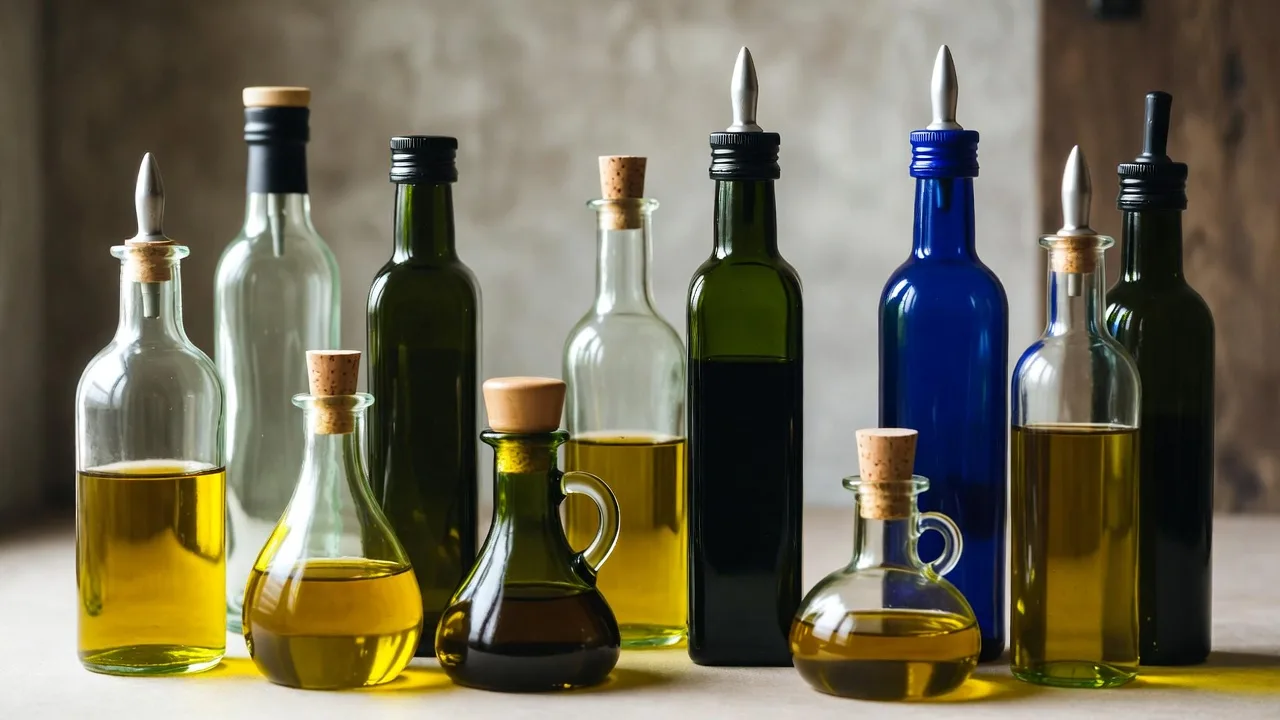
| Dark green / amber glass | 85–99% UV blocked | Excellent (airtight cap) | +50% vs clear glass | Daily use, gifting, most home kitchens |
| Stainless steel tin | 100% blocked | Excellent | +60% vs clear glass | Professional kitchens, bulk buying, travel |
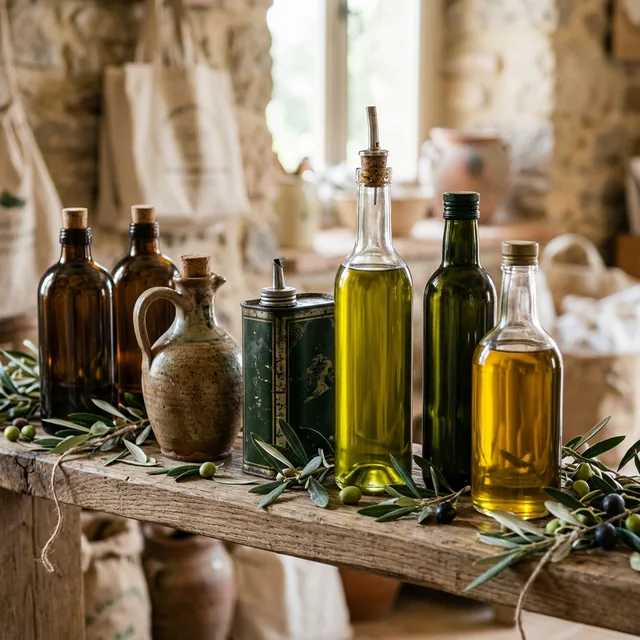
| Ceramic | 100% blocked | Good (depends on seal) | +55% vs clear glass | Countertop dispenser, gifts, decorative use |
| Clear glass | None | Excellent (airtight cap) | Baseline (shortest) | Not recommended for quality EVOO |
| Plastic (PET) | Minimal | Poor (oxygen permeable) | –50% vs dark glass | Budget oils only — avoid for premium EVOO |
Dark Glass Bottles — The Gold Standard
Dark green and amber glass oil olive bottles are the most common packaging for premium EVOO, and for good reason. Glass is chemically inert (no flavor or chemical leaching), recyclable, attractive, and — when sufficiently dark — blocks 85-99% of UV light. The Olive Oil Times reports that dark green glass provides the best UV protection, followed by amber, with clear glass providing essentially zero UV protection.
Premium producers from Italy, Greece, and Spain overwhelmingly choose dark glass for their flagship products. The weight and elegance of glass also communicates quality to consumers. For daily consumption, a 500ml dark glass bottle with a tight-fitting cap is the ideal everyday container.
Ceramic Bottles — Beauty Meets Function
Ceramic oil olive bottles provide complete light blockage — no UV or visible light reaches the oil, period. Traditional ceramic "amphorae" have been used for olive oil storage since ancient times. Modern ceramic bottles add an aesthetic dimension — they're popular as kitchen countertop dispensers and premium gift items. The downside: ceramic is heavier than glass, more expensive, and impossible to see the oil level without opening.
Stainless Steel Tins — Professional Choice
Stainless steel tins provide complete light protection, are lightweight, unbreakable, and increasingly favored by professional kitchens and quality-focused producers. Many premium brands sell their early harvest, high-polyphenol oils in tins of 250ml, 500ml, 1L, 3L, and 5L sizes. Tins are particularly effective at preventing oxygen ingress when properly sealed. Bulk olive oil (5-20kg) from Mediterranean producers typically comes in food-grade tinplate containers.
Plastic Bottles — The Worst Option
PET plastic bottles are the least suitable container for quality olive oil. Plastic allows light penetration, can leach chemicals (BPA, phthalates) into the oil over time, is permeable to oxygen, and provides minimal thermal insulation. The shelf life of EVOO in clear plastic is approximately half that of oil in dark glass. While plastic is lighter and cheaper — making it common for budget supermarket oils — it is fundamentally incompatible with preserving the delicate polyphenols that define premium EVOO quality.
Does Olive Oil Freeze? The Complete Answer
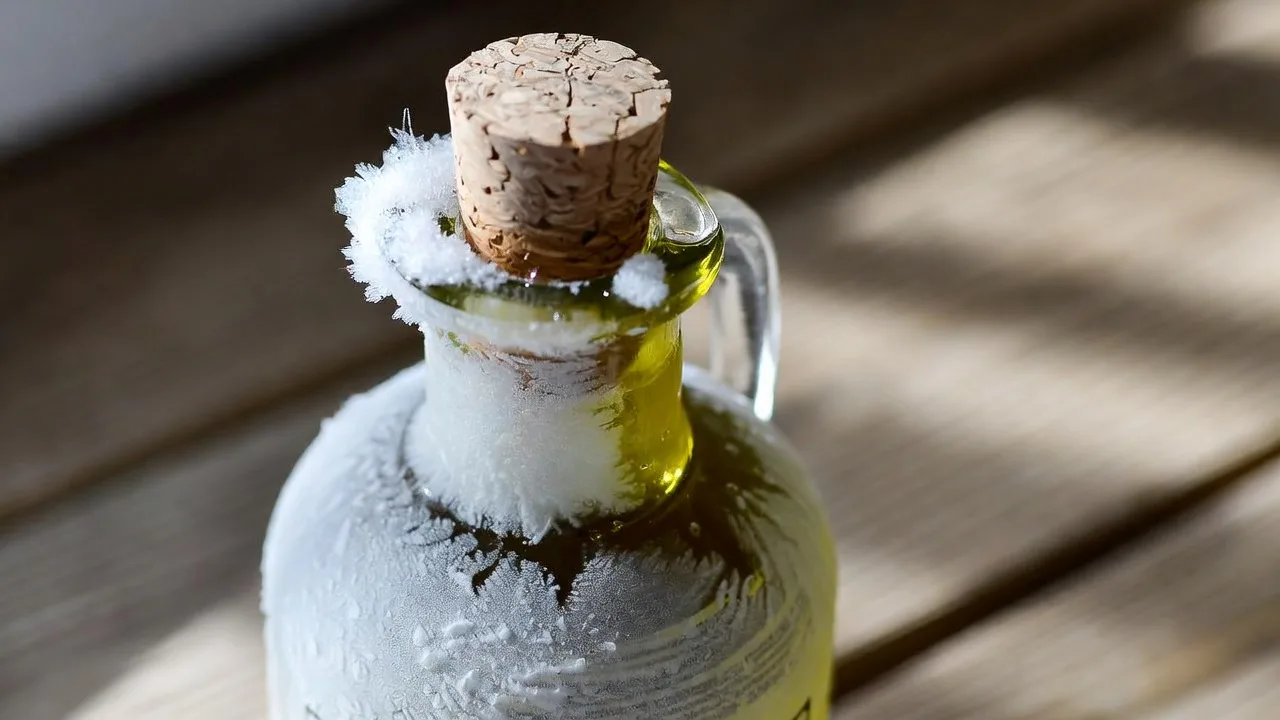
Yes — olive oil will solidify when exposed to cold temperatures, but it doesn't have a single, precise "freezing point" like water does. Olive oil begins to crystallize and become cloudy at approximately 10°C (50°F) and becomes fully solid at around -6°C (21°F). The exact behavior depends on the polarity profilee — oils with more monounsaturated oleic acid solidify at higher temperatures than oils with more polyunsaturated fats.
Does freezing damage olive oil? No. Freezing and thawing does not damage the chemical composition, nutritional value, or polyphenol content of olive oil. The crystallization is purely physical — the fat molecules rearrange into a solid structure that fully reverses upon warming. However, repeated freeze-thaw cycles can accelerate quality degradation by creating micro-fractures in the oil's structure that increase oxygen exposure.
Can you freeze olive oil to extend shelf life? While freezing effectively stops oxidation and can extend shelf life significantly, most experts recommend cool (14-18°C) rather than frozen storage for practical everyday use. If you purchase bulk olive oil (5-20kg), decanting into smaller dark bottles and freezing the remainder is a practical strategy.
Olive Oil Shelf Life: How Long Does It Last?
Properly stored EVOO maintains peak quality for 18-24 months from harvest. After this window, polyphenols degrade, volatile aromatics fade, and the oil gradually loses its fruity character. The oil remains safe to consume for considerably longer (up to 3-4 years if stored well), but the health benefits diminish as polyphenols decrease.
Key factors affecting shelf life include harvest date (fresher is always better — look for the harvest date, not the "best by" date), bottle material (dark glass or tin extends shelf life by 30-50% vs clear glass), storage temperature (cool is critical — every 10°C above 15°C roughly halves the shelf life), seal quality (minimize oxygen exposure after opening), and the oil's initial polyphenol content (high-polyphenol oils last longer because polyphenols act as natural antioxidants).
Olive Oil Storage: The 5 Rules
- Keep dark — Store in dark glass, ceramic, or tin. Never leave any bottle in direct sunlight or under bright kitchen lights.
- Keep cool — Optimal temperature is 14-18°C (57-65°F). A cool pantry or cabinet away from the stove is ideal. Never store above the oven.
- Keep sealed — Replace caps tightly after each use. Oxygen exposure accelerates rancidity faster than any other factor.
- Keep small — Transfer bulk oil into smaller bottles as you use it. A half-empty 3L container has a large air headspace that degrades the remaining oil. Multiple small bottles minimize this problem.
- Keep tracked — Write the opening date on the bottle with a marker. Once opened, use within 3-6 months for optimal flavor and polyphenol retention.
Pour Spouts, Dispensers & Accessories
Pour spouts help control oil flow and reduce mess, but they present a storage downside — most pour spouts don't seal airtight, allowing continuous oxygen exposure. For everyday cooking oil that you'll use within weeks, this is acceptable. For premium finishing oils, always recap tightly between uses.
Gravity-fed dispensers with spring-loaded caps provide the best of both worlds — easy pouring with airtight sealing between uses. Look for stainless steel or dark-coated glass dispensers. Avoid decorative clear glass cruets for EVOO storage — they're beautiful but catastrophic for oil quality.
Olive Oil Gift Sets
Olive oil gift sets make excellent presents for food enthusiasts. The best sets include artisanal small-batch EVOOs in attractive packaging, variety samplers comparing different regional oils (e.g., Greek vs Italian vs Spanish), infused oil collections (featuring lemon, basil, rosemary, and chili varieties), and olive oil paired with specialty vinegars, sea salts, or artisanal bread. When choosing gift sets, prioritize those packaged in dark glass or tin with clear harvest dates. Sets with clear glass bottles may look pretty on the shelf but won't maintain quality — they're designed for display, not for the health-conscious consumer.
Bulk Olive Oil: 20kg Containers & Pricing
Buying olive oil in bulk (5-20kg containers) is common in Mediterranean households and offers significant cost savings — typically 30-50% less per liter than individual retail bottles. The key considerations for bulk buying include sourcing directly from trusted producers (farmer's markets, cooperative shops, or online direct-to-consumer brands), choosing food-grade tin-plated containers (never bulk oil in plastic), decanting into smaller dark bottles immediately after purchase, and proper storage of the remaining bulk container in a cool, dark location.
For soap making and cosmetic applications, bulk pomace olive oil is available at significantly lower prices than EVOO — typically $5-8 per liter versus $20-40 per liter for premium EVOO.
Mini Olive Oil Bottles
Mini olive oil bottles (25-100ml) serve several purposes: wedding and event favors, restaurant table service, travel-friendly portions, and sampler sets for exploring different regional varieties. They're also practical for maintaining freshness — a mini bottle is consumed quickly, minimizing the time the oil is exposed to oxygen. For events like weddings, custom-labeled mini bottles of local EVOO make memorable, useful favors that guests will actually appreciate.
How to Tell If Your Olive Oil Has Gone Bad
Even in the best bottles with perfect storage, olive oil eventually degrades. Signs of degradation include a crayon-like or waxy smell (rancidity from oxidation), flat, greasy mouthfeel with no fruitiness, no pepperiness or bitterness (polyphenols have degraded), a vinegary or wine-like taste (fermentation/fusty defect), and musty or muddy flavors (mold or improper processing). If your oil shows these signs, it's still safe for soap making or cosmetic use but has lost its nutritional value and culinary character for cooking and finishing.
Olive Oil Bottle Storage: The Final Checklist
Dark glass, ceramic, or stainless steel. Cool pantry, not above the stove. Sealed tight after every use. Opened bottles used within 3-6 months. Harvest date tracked. Do these five things and your high-polyphenol EVOO stays as fresh as the day it left the Mediterranean mill.