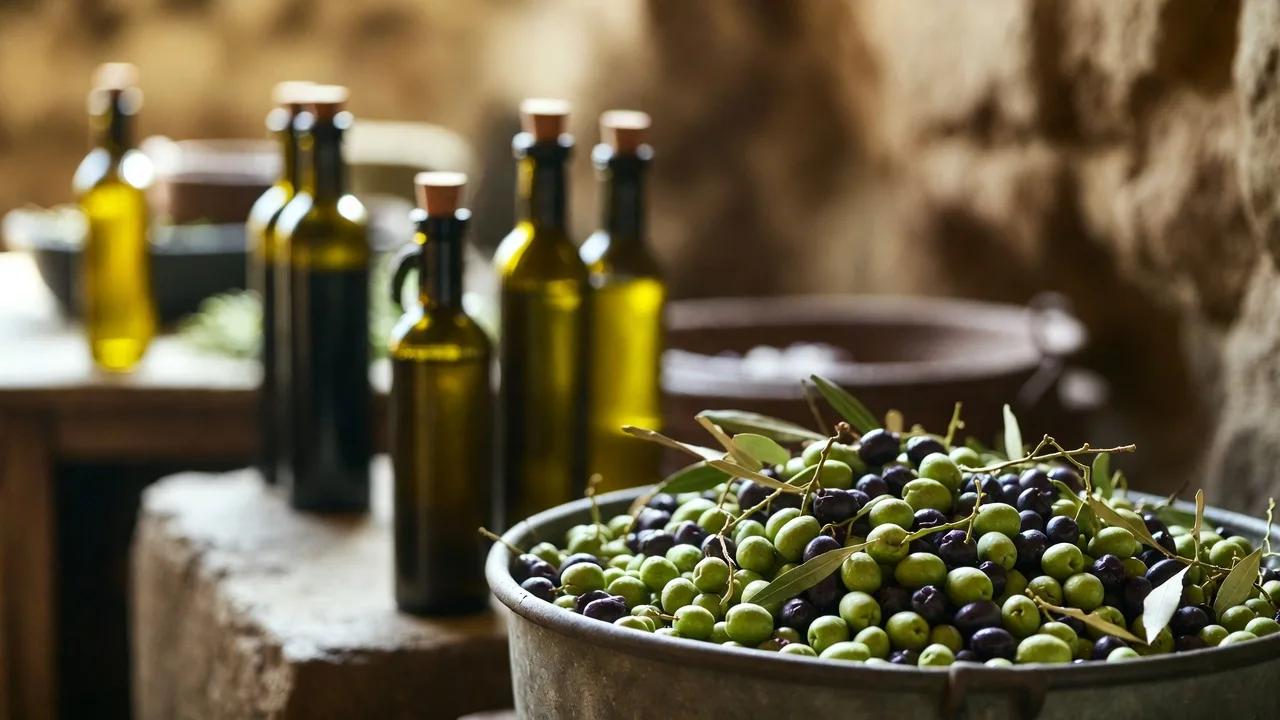
Early harvest olive oil is made from green, unripe olives picked weeks before they reach full maturity. The result: oil with 2-4 times the polyphenol content of late-harvest oil, dramatically more intense flavor, and measurably greater health benefits. Early harvest olive oil is why serious producers obsess over timing — every day an olive stays on the tree past its optimal green stage, it gains oil volume but loses bioactive compounds. The trade-off between yield and quality is the central tension in olive oil production, and early harvest olive oil represents the uncompromising quality choice.
What Makes Early Harvest Olive Oil Different
Olive maturation follows a predictable biochemical timeline. Understanding it explains why early harvest olive oil is superior.
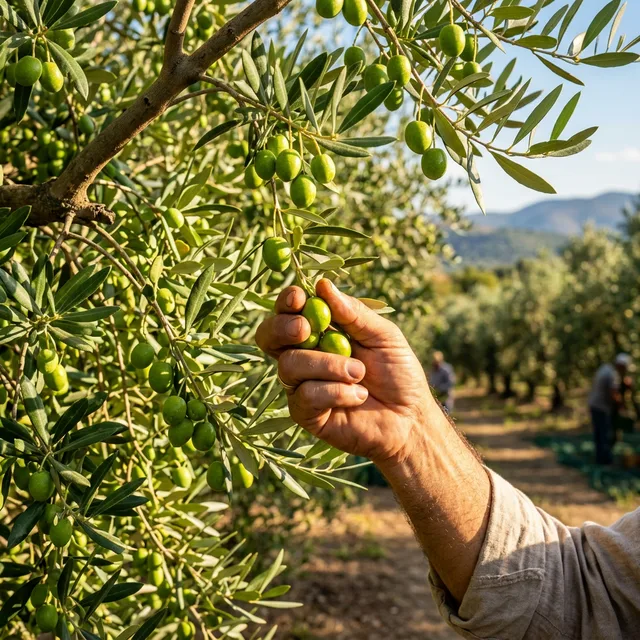
Green stage (early harvest — October to mid-November in the Northern Hemisphere): Olives are firm, bright green, and contain maximum concentrations of oleuropein, oleocanthal, oleacein, and hydroxytyrosol — the four key polyphenols. Oil content per olive is low (8-14%), meaning you need more olives to produce less oil. This is why early harvest olive oil costs more — lower yields require higher volumes of raw fruit.
Veraison (turning — mid-November to December): Olives begin changing from green to purple/black. Polyphenol levels start declining as oleuropein converts to other compounds. Oil content per olive increases (15-22%). Most producers harvest during this window for balanced quality and acceptable yields.
Black/ripe stage (late harvest — December to February): Olives are fully mature, soft, dark purple to black. Oil content peaks (20-30%), maximizing oil volume per tree. But polyphenol levels have dropped 50-80% from their green-stage peak. Late-harvest oil is milder, fruitier, and lower in the compounds that drive EVOO's health benefits.
Early Harvest Olive Oil Polyphenol Advantage
The polyphenol difference between early and late harvest is not subtle. Research published in the Journal of Food Chemistry documents the drop across maturation stages:
- Early harvest olive oil (Coratina, green stage): 600-1,000+ mg/kg total phenols
- Mid-harvest (veraison): 300-500 mg/kg total phenols
- Late harvest (ripe): 150-250 mg/kg total phenols
The EFSA authorized health claim requires a minimum of 5mg of hydroxytyrosol and its derivatives per 20g of oil. Early harvest olive oil exceeds this threshold easily — often by 3-5x. Late-harvest oil from the same variety, same grove, same producer may barely meet it. Harvest timing alone can determine whether an oil qualifies for the EU health claim.
Early Harvest Olive Oil Flavor Profile
Early harvest olive oil hits differently. The tasting experience is unmistakable.
Aroma: Intensely green — fresh-cut grass, green tomato leaf, artichoke, green banana, raw almond. The aromatics are aggressive and layered. Opening a bottle of early harvest olive oil fills the room. This intensity comes from volatile compounds (hexanal, hexenal, and other C6 aldehydes) that are most concentrated in green olives.
Bitterness: Pronounced. Oleuropein and oleacein deliver a bitter profile that ranges from pleasantly assertive (well-balanced early harvest olive oil) to bracingly intense (ultra-green harvest from Coratina or Koroneiki). Bitterness is a positive attribute in professional olive oil tasting — it directly correlates with polyphenol content. The International Olive Council tasting panel methodology rates bitterness as a desirable characteristic.
Pungency: The oleocanthal burn at the back of the throat is the signature of early harvest olive oil. High-quality early harvest oil produces a cough response — literally. This is oleocanthal triggering the TRPA1 receptor in the throat. Research published in Nature identified this mechanism and confirmed that pungency intensity correlates directly with oleocanthal concentration. If your early harvest olive oil doesn't make you cough, it's either not truly early harvest or the variety is naturally low in oleocanthal.
Fruitiness: Green-fruit forward. Green apple, unripe stone fruit, green fig. This is distinctly different from the ripe-fruit softness (banana, butter, apple sauce) of late-harvest oil.
Early Harvest Olive Oil Health Benefits
Every health benefit attributed to high-polyphenol olive oil is maximized in early harvest olive oil because the bioactive compound concentrations are highest.
Cardiovascular: The PREDIMED trial used high-polyphenol EVOO — effectively early or mid-harvest oil — and demonstrated 30% cardiovascular event reduction. Late-harvest oil with depleted polyphenols would not deliver the same result at the same dose.
Anti-inflammatory: Oleocanthal concentrations in early harvest olive oil can reach 200-400mg/kg — delivering a meaningful anti-inflammatory dose in 2-3 tablespoons. The same dose of late-harvest oil might contain 40-80mg/kg oleocanthal. For people using olive oil specifically for anti-inflammatory benefits, early harvest olive oil delivers 3-5x the active compound per serving.
Antioxidant protection: Hydroxytyrosol — the most potent natural antioxidant measured by ORAC — is 2-4x more concentrated in early harvest olive oil. This translates to greater protection of blood lipids from oxidative stress, the specific mechanism behind the EFSA health claim.
Fatty acid profile: Early harvest olive oil has marginally higher oleic acid percentages (76-82%) than late-harvest oil (68-76%) from the same variety, because oleic acid concentration increases as olives mature, peaks at veraison, then slightly declines as other fatty acids accumulate in final ripening.
Early Harvest Olive Oil: Why It Costs More
Early harvest olive oil typically costs 30-100% more than regular EVOO. This premium reflects real production economics, not marketing hype.
- Lower oil yield: Green olives contain 8-14% oil by weight. Ripe olives contain 20-30%. A producer needs 2-3x more green olives to produce the same volume of early harvest olive oil. More raw material = higher cost.
- Harder extraction: Green olives are harder and more fibrous than ripe ones. Extracting oil from green fruit requires more energy, longer malaxation, and more precise temperature control. Processing costs increase 15-25%.
- Timing pressure: The optimal early harvest window is 2-3 weeks. Miss it, and the olives enter veraison. This compressed timeline demands rapid harvesting — often requiring larger crews working shorter, more intense shifts. Labor costs spike.
- Smaller batches: Lower yields mean smaller production volumes. Smaller batches can't benefit from the economies of scale that high-volume late-harvest production enjoys.
Expect to pay $25-50 per 500ml for genuine early harvest olive oil. Premium single-variety early harvest (like Coratina) from award-winning producers can reach $50-80 per 500ml. The polyphenol-per-dollar value is still excellent — compare it to polyphenol supplements, which deliver far less bioactivity at similar or higher prices.
Early Harvest Olive Oil: Top Producers
- Gaea Fresh (Greece): Single-variety Koroneiki early harvest olive oil from Crete. Picked in October at peak green stage. Polyphenols consistently above 700mg/kg. Clean, intensely bitter-peppery profile. $28-40 per 500ml.
- Galantino (Puglia): Puglia's premier producer offers a "Primo" early harvest Coratina line harvested in October. Polyphenols 600-900mg/kg. Dramatic green color and explosive flavor. $30-45 per 500ml.
- Laconiko (Washington state): Early harvest Koroneiki grown in Washington — a new-world early harvest olive oil with pedigree Greek genetics. Polyphenols 500-800mg/kg. Demonstrates that early harvest olive oil quality depends on timing, not geography. $35-55 per 500ml.
- Castillo de Canena (Jaén, Spain): Their "First Day of Harvest" Picual and Arbequina oils are picked on the season's first possible date. Beautifully packaged, competition-winning, and genuinely premium. $30-50 per 500ml.
- Olio Ferrara (Andria, Puglia): Ultra-limited Coratina early harvest olive oil from 500-year-old trees. Polyphenols above 900mg/kg in best years. Artisanal production under 2,000 bottles per year. $45-70 per 500ml.
How to Identify Genuine Early Harvest Olive Oil
The label "early harvest" is not regulated in most markets — any producer can use it. Protect yourself with these verification strategies:
- Harvest date: Genuine early harvest olive oil displays a specific harvest date — October or early November for Northern Hemisphere oils. If there's no harvest date, only a "best by" date, you can't verify early harvest timing. Mass-market brands rarely provide harvest dates.
- Color: Early harvest olive oil is vivid green — almost emerald — due to high chlorophyll content. Late-harvest oil is golden-yellow. Color alone isn't conclusive (some producers add olive leaves to boost green color artificially), but extreme green is a positive signal.
- Taste: The cough test. Genuine early harvest olive oil produces a sharp, peppery burn at the throat. If the oil is smooth, mild, and butter-like, it's late harvest regardless of what the label claims.
- Polyphenol data: The best early harvest olive oil producers publish lab-tested polyphenol content. Look for numbers above 500mg/kg. If a producer won't share polyphenol data, question the "early harvest" claim.
- Price: Genuine early harvest olive oil cannot be cheap. If it's under $20 per 500ml and labeled "early harvest," be skeptical. The production economics simply don't support low prices.
How to Use Early Harvest Olive Oil
Early harvest olive oil's intensity demands specific applications — don't waste it on deep frying.
- Raw finishing: Drizzle over grilled meat, fish, bruschetta, soup, or fresh cheese. The aggressive flavor transforms simple dishes into complex experiences.
- Daily tablespoon: Take 1-2 tablespoons raw for maximum polyphenol absorption. The burn means it's working.
- Salads: Mix with lemon juice and salt for a vinaigrette that dominates the palate. Early harvest olive oil makes lettuce taste like cuisine.
- Light cooking: Low-temperature sautéing preserves most polyphenols. Reserve the raw finishing drizzle for maximum benefit.
Store early harvest olive oil in ceramic or dark glass bottles away from heat and light. Use within 6-9 months of harvest — the high polyphenol content provides natural antioxidant protection, but even early harvest olive oil degrades over time. If your kitchen gets cold enough for the oil to solidify, that's fine — thaw and use normally.