Kalamata olive oil is the most recognized name in Greek extra virgin olive oil — and for good reason. The Kalamata region in southern Peloponnese produces some of the world's most polyphenol-rich EVOOs, grown in a terroir perfected over 3,000 years of continuous cultivation. The Koroneiki olive — Greece's dominant variety — thrives in Kalamata's rocky, sun-baked hillsides, producing small, concentrated fruit that yields intensely flavored, health-dense oil. This guide covers everything: terroir, variety, production, health science, top brands, and how to spot authentic Kalamata olive oil.
What Makes Kalamata Olive Oil Different
Kalamata olive oil stands apart from other Mediterranean olive oils because of three converging factors.
The Koroneiki variety: More than 90% of Kalamata olive oil comes from Koroneiki olives — the smallest cultivated olive variety in the world. The tiny fruit (1-2 grams each) has an exceptionally high oil-to-flesh ratio and concentrates phenolic compounds at levels other varieties rarely match. Where a Sicilian Nocellara might deliver 250-400mg/kg polyphenols, Koroneiki from Kalamata routinely hits 500-800mg/kg — and elite producers exceed 1,000mg/kg.
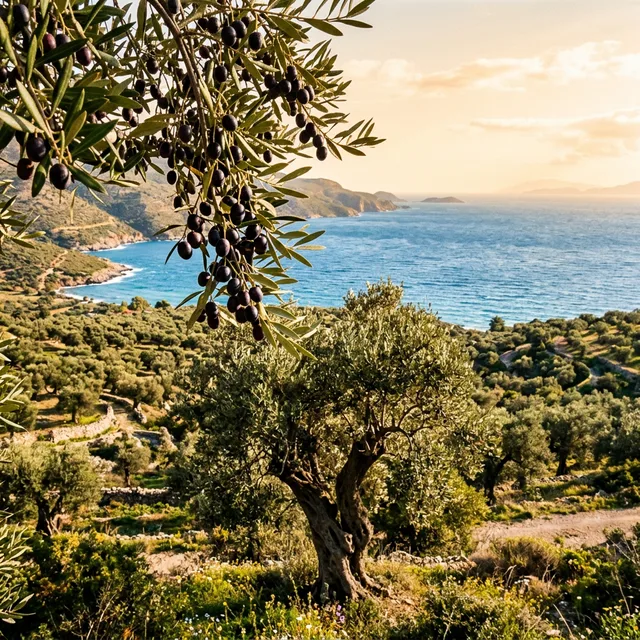
The Messinia terroir: The Kalamata region (officially Messinia prefecture) sits at the southwestern tip of the Peloponnese. The climate is extreme — blazing summers with temperatures above 35°C, mild winters, minimal rainfall during the growing season, and constant sea breezes from the Messenian Gulf. The soil is rocky, calcareous, and iron-rich. These stress conditions push Koroneiki trees to produce maximum defense compounds — the polyphenols that give Kalamata olive oil its characteristic bitterness, pepperiness, and exceptional health profile.
Ancient cultivation knowledge: Olive trees have grown in the Kalamata region since at least 1,000 BC. The ancient Messenians were olive oil producers before the Classical Athenians. This millennia-deep expertise — passed through generations — means Kalamata producers understand their trees, their land, and their harvest timing at an instinctive level that newer olive-growing regions cannot replicate.
Kalamata Olive Oil Production
Modern Kalamata olive oil production combines tradition with technology. The harvest runs from late October through December — earlier harvest dates produce greener, more bitter, higher-polyphenol oil. Late harvest produces milder, fruitier, lower-polyphenol oil.
The best Kalamata olive oil producers follow a strict protocol: handpicking or mechanical shaking (never ground collection), transport to the mill within 4 hours, cold extraction below 27°C using two-phase centrifugal systems, immediate filtering and nitrogen-blanketing to prevent oxidation, and bottling in dark glass or tin within days of extraction.
This speed matters. Olives begin fermenting within hours of leaving the tree. Every hour of delay increases free fatty acid (FFA) levels and reduces polyphenol content. The International Olive Council sets the EVOO FFA limit at 0.8% — premium Kalamata olive oil producers target below 0.3%.
Kalamata Olive Oil Health Benefits
Kalamata olive oil's extreme polyphenol content makes it one of the healthiest oils available. The science is substantial.
Cardiovascular protection: The landmark PREDIMED study demonstrated that a Mediterranean diet supplemented with high-polyphenol EVOO reduced major cardiovascular events by 30%. Kalamata olive oil, with its naturally elevated polyphenol levels, is exactly the type of oil used in this research.
Anti-inflammatory action: Oleocanthal — the compound responsible for the throat-burning pepperiness in Kalamata olive oil — is a natural COX-2 inhibitor with potency comparable to ibuprofen. Research published in Nature identified this mechanism. The stronger the burn, the more oleocanthal present — and Kalamata olive oil burns hard.
Neuroprotection: Oleocanthal also shows promise in Alzheimer's research. Studies from the National Library of Medicine demonstrate that oleocanthal enhances clearing of amyloid-beta plaques — the protein aggregates implicated in Alzheimer's disease. Daily consumption of high-polyphenol olive oil is increasingly studied as a neuroprotective strategy.
EU health claim: The European Food Safety Authority (EFSA) authorized a specific health claim for olive oil polyphenols: oils containing at least 5mg of hydroxytyrosol per 20g of oil "contribute to the protection of blood lipids from oxidative stress." Most Kalamata olive oil from reputable producers meets or exceeds this threshold comfortably.
Kalamata Olive Oil Tasting Profile
Authentic Kalamata olive oil from early-harvest Koroneiki olives delivers a distinctive sensory experience:
- Aroma: Fresh-cut grass, green tomato leaf, green banana, and a hint of wild herbs (thyme, oregano) reflecting the Peloponnese landscape
- Taste: Intensely fruity on entry, developing rapidly into pronounced bitterness — artichoke, raw almond, chicory
- Finish: Strong, sustained pepperiness that hits the back of the throat and lingers for 30+ seconds. This is oleocanthal — the more it burns, the better the oil
- Mouthfeel: Light-bodied despite the intense flavor — Koroneiki produces characteristically fluid, non-greasy oil
If you're used to mild Sicilian Nocellara or Spanish Arbequina oils, Kalamata olive oil will feel aggressive. That intensity is the point — it's the flavor of concentrated polyphenols doing their work.
Top Kalamata Olive Oil Brands
The best Kalamata olive oil brands prioritize early harvest, rapid extraction, and transparent sourcing. Here are the standouts:
- Oliveology: Ultra-premium Koroneiki from Messinia. Polyphenol-tested at 700-900mg/kg. Unfiltered, intensely peppery. $30-45 per 500ml.
- Laconiko: Family estate in Laconia (neighboring Messinia). Award-winning single-variety Koroneiki. 500-700mg/kg polyphenols. $25-35 per 500ml.
- Kosterina: Direct-to-consumer Kalamata olive oil brand focused on health claims. Polyphenol-certified, well-marketed. $22-30 per 500ml.
- Hypereleon: Scientific approach — each batch lab-tested for polyphenol content. Early harvest Koroneiki from Laconia. 800-1200mg/kg. $35-50 per 500ml.
- Terra Creta: Cooperative from Crete (not Kalamata technically, but same Koroneiki variety). Great value entry to Greek EVOO. $15-22 per 500ml.
How to Spot Fake Kalamata Olive Oil
"Kalamata" is not a legally protected term in most export markets — meaning any producer can label their oil "Kalamata style" without sourcing from the region. Protect yourself with these checks:
Look for PDO certification: "Kalamata PDO" (Protected Designation of Origin) is legally protected under EU law. Only oil produced from olives grown and processed in the defined Messinia area can carry this designation. The PDO seal guarantees authenticity.
Check the harvest date: Genuine Kalamata olive oil producers print harvest dates (not just "best by" dates). If there's no harvest date, question the authenticity.
Taste test: Real Kalamata olive oil from Koroneiki olives is noticeably bitter and peppery. If a bottle labeled "Kalamata" tastes mild, flat, or greasy — it's likely blended with refined oil or sourced from a different region.
Price reality: Authentic Kalamata olive oil costs $20-50 per 500ml at retail. If you're seeing "Greek Kalamata EVOO" for $8 per liter, it's almost certainly not what it claims to be.
Kalamata Olive Oil in the Kitchen
Greek Salad with Kalamata Olive Oil
The classic horiatiki demands excellent Kalamata olive oil — it's the dressing. Chop tomatoes, cucumber, green pepper, and red onion. Top with a slab of feta, Kalamata olives, dried oregano, and a generous pour of Kalamata olive oil. No vinegar needed — the oil's natural bitterness and the tomato's acidity provide balance. Use at least 3 tablespoons per serving. This is the dish where mediocre oil is exposed and great Kalamata olive oil shines.
Finishing Grilled Lamb
Drizzle raw Kalamata olive oil over grilled lamb chops immediately after resting. The heat releases the oil's herbaceous aromatics while the pepperiness cuts through the lamb's richness. Add flaky sea salt, fresh lemon juice, and dried oregano. This is how lamb is served across the Peloponnese — simple, bold, and entirely dependent on quality Kalamata olive oil.
Fasolada: Greek White Bean Soup
Fasolada is Greece's national dish — and it's finished with a heavy pour of Kalamata olive oil. Simmer white beans with tomatoes, celery, carrots, and onions until tender. Ladle into bowls and pour a tablespoon of raw Kalamata olive oil on top. The oil forms a glistening, peppery layer that integrates as you eat. Serve with crusty bread and more oil for dipping — a complete Mediterranean meal for under $3 per serving.
Daily Health Ritual
Many Greek households start the day with a tablespoon of raw Kalamata olive oil — sometimes followed by a squeeze of lemon. This daily olive oil ritual delivers a concentrated dose of polyphenols on an empty stomach for maximum absorption. The intense pepperiness wakes you up faster than coffee.
Kalamata Olive Oil vs. Other Greek Regions
Greece produces EVOO across many regions. How does Kalamata olive oil compare?
vs. Cretan olive oil: Crete produces more volume and also uses Koroneiki. Quality is comparable, but Cretan oils tend slightly milder due to the island's warmer, more humid climate. Kalamata olive oil typically hits harder on bitterness and pepper.
vs. Laconian olive oil: Laconia borders Messinia — similar terroir, same Koroneiki variety. Laconian oil is often indistinguishable from Kalamata olive oil in blind tastings. Many "Kalamata" brands actually source from both regions.
vs. Lesbos olive oil: The Aegean island of Lesbos uses different varieties (Kolovi, Adramytiani) producing softer, fruitier oils with lower polyphenol content. Beautiful oils, but a different style entirely from the intensity of Kalamata olive oil.
Store It Right
Kalamata olive oil's high polyphenol content gives it a natural shelf-life advantage — polyphenols act as built-in antioxidants that slow degradation. Still, proper storage in dark glass or tin, away from heat and light, is essential. Use opened bottles within 4-6 months. Buy based on harvest date, not best-by date. And when you find a producer you trust, stock up during harvest season (November-January) for the freshest Kalamata olive oil of the year.