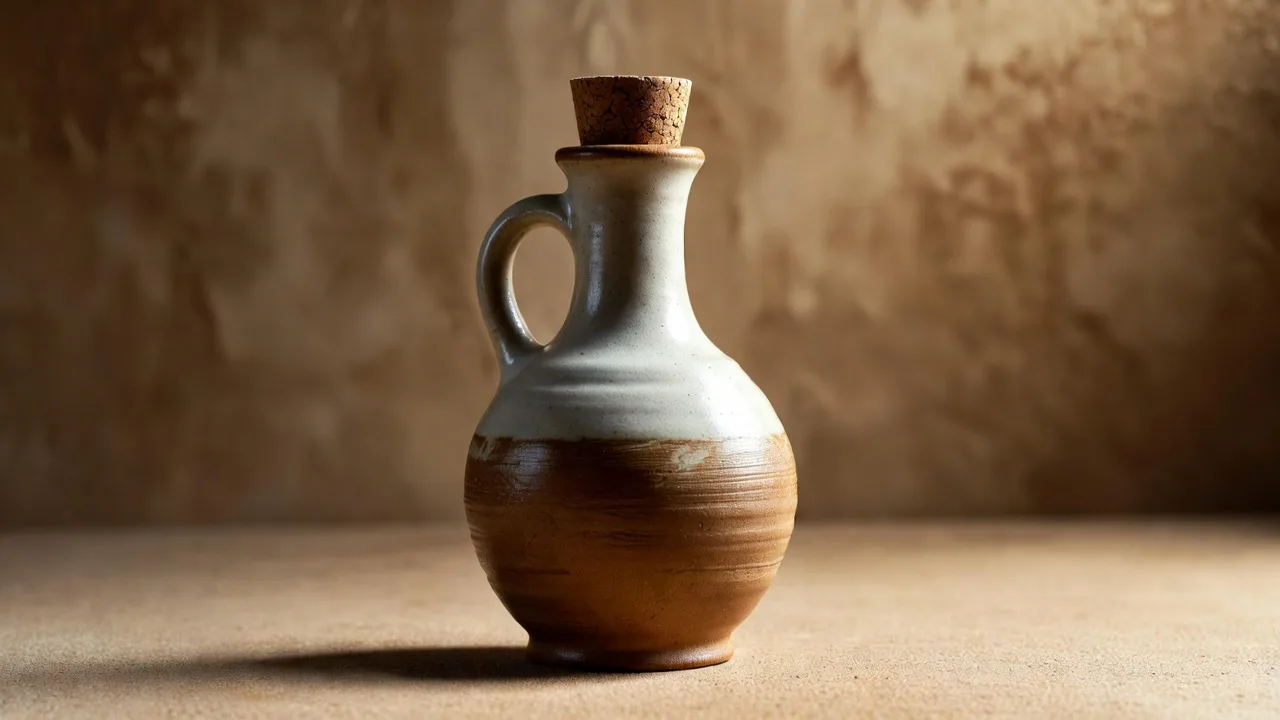
A ceramic olive oil bottle blocks 100% of light — making it the single best container for preserving extra virgin olive oil's flavor, polyphenols, and shelf life. Light is EVOO's worst enemy. UV and visible light trigger photo-oxidation that degrades polyphenols, destroys chlorophyll, and turns premium oil rancid weeks faster than it should. Dark glass blocks most light. Tin blocks all light. But a ceramic olive oil bottle does both — total light blockage plus thermal insulation — while looking stunning on your kitchen counter.
Why a Ceramic Olive Oil Bottle Protects Better Than Glass
The science is straightforward. Research published in the Journal of Food Chemistry measured polyphenol degradation in olive oil stored under different conditions. Light exposure was the primary accelerator of quality loss — more damaging than heat or oxygen alone.
Here's how different bottle materials compare for light protection:
- Clear glass: Blocks 0% of light — worst option. EVOO degrades visibly within weeks on a sunlit counter.
- Green glass: Blocks 30-50% of light — better, but significant UV still penetrates.
- Dark amber/brown glass: Blocks 80-90% of light — good protection for pantry storage.
- Tin/stainless steel: Blocks 100% of light — excellent protection, no thermal insulation.
- Ceramic olive oil bottle: Blocks 100% of light AND provides thermal insulation — the best all-around protection.
A ceramic olive oil bottle's thick walls don't just stop light. They buffer temperature fluctuations. Kitchen temperatures swing 5-10°C between cooking (stove heat) and nighttime cooling. These rapid temperature changes accelerate oxidation. Ceramic's thermal mass absorbs and releases heat slowly, keeping the oil inside at a more stable temperature than thin glass or metal containers.
Ceramic Olive Oil Bottle: Top Picks
Traditional Mediterranean Ceramic Bottles
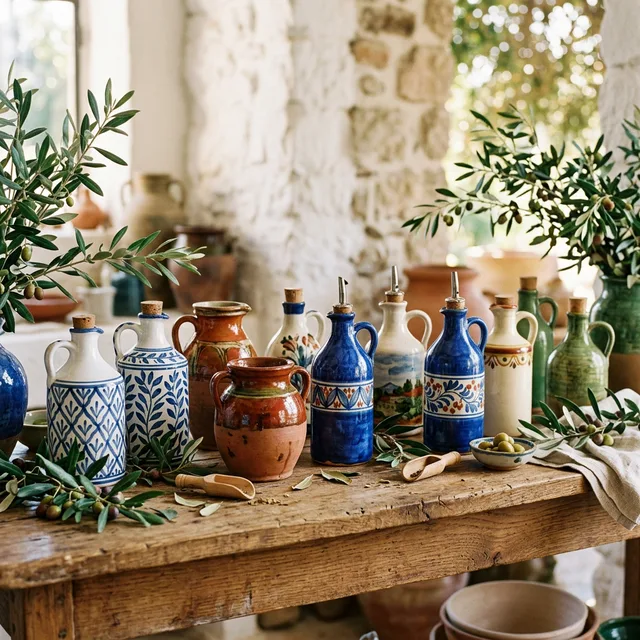
Italian ceramic olive oil bottle (Deruta style): Hand-painted majolica ceramic from Deruta, Umbria — Italy's ceramic capital. These ceramic olive oil bottles feature traditional blue, yellow, and green patterns depicting olive branches, sunflowers, or geometric Mediterranean motifs. Functional pour spouts, cork or ceramic stoppers. Capacity: 500ml-1L. Price: $30-80. These are the classic choice — beautiful enough to display, functional enough for daily use.
Spanish ceramic olive oil bottle (Andalusian style): Glazed terracotta from Andalusia — Spain's olive oil heartland. Simpler designs than Italian versions, often in earth tones (olive green, terracotta red, cream). Robust construction, wide mouths for easy refilling. Capacity: 250ml-750ml. Price: $20-50. Excellent everyday ceramic olive oil bottle.
Portuguese ceramic olive oil bottle: From the Alentejo and Algarve regions. Distinctive blue-and-white azulejo-inspired patterns. Narrow pour spouts for precision drizzling. Often sold as part of a set with vinegar bottles and salt cellars. Capacity: 250ml-500ml. Price: $25-60.
Modern Ceramic Olive Oil Bottles
Emile Henry ceramic oil cruet: French-made, minimalist design. Matte black, cream, or burgundy glazes. Anti-drip pour spout and silicone-sealed cap. Dishwasher safe. Capacity: 400ml. Price: $35-45. The best modern ceramic olive oil bottle for contemporary kitchens.
Le Creuset stoneware oil cruet: Premium French stoneware in Le Creuset's signature colors (flame, marseille, cerise). Heavy, stable base. Tight-fitting cap minimizes oxygen exposure. Capacity: 350ml. Price: $30-40. Brand recognition and quality engineering make this a popular ceramic olive oil bottle choice.
Heath Ceramics olive oil bottle: Handmade in San Francisco. Clean, modern lines in Heath's signature mid-century glazes. Premium artisanal option. Capacity: 375ml. Price: $60-85. A ceramic olive oil bottle that doubles as a design object.
Ceramic Olive Oil Bottle vs. Other Storage Options
Ceramic vs. Dark Glass
Dark glass bottles are the most common olive oil storage choice. They're cheaper ($2-10), lighter, and you can visually check oil levels. But dark glass still transmits 10-20% of light — enough to degrade polyphenols over months. A ceramic olive oil bottle blocks 100%. If you store EVOO on the counter (exposed to daily kitchen light), ceramic provides meaningfully better protection. If you store in a dark pantry, the difference is negligible.
Ceramic vs. Tin
Tin cans (the container most Italian producers and Greek producers use for bulk packaging) block 100% of light — matching ceramic. But tin conducts heat rapidly, providing zero thermal insulation. A tin can sitting near a warm stove heats up quickly, accelerating oxidation of the oil inside. A ceramic olive oil bottle in the same position stays cooler for longer. Tin also dents, affecting seal integrity, while ceramic maintains its shape indefinitely.
Ceramic vs. Stainless Steel
Stainless steel dispensers (like the Simplehuman or OXO models) block all light and are lightweight and durable. They're excellent functional containers. But stainless steel conducts heat even faster than tin — providing the worst thermal insulation of any opaque material. A ceramic olive oil bottle is the better choice if temperature stability matters in your kitchen environment.
Ceramic vs. Plastic
Never store quality EVOO in plastic. Plastic containers can leach chemicals into the oil, absorb and transmit flavors, and provide zero light or thermal protection. No comparison to a ceramic olive oil bottle. The International Olive Council recommends glass, tin, or ceramic for olive oil storage — never plastic.
How to Choose the Right Ceramic Olive Oil Bottle
Not all ceramic olive oil bottles are equal. Key features to evaluate:
Pour spout design: The best ceramic olive oil bottles have narrow, tapered pour spouts that deliver a controlled, thin stream for finishing drizzles. Wide-mouth ceramic bottles work for cooking (quick pours) but lack precision for finishing. Anti-drip lips prevent oil from running down the outside of the bottle — a messy problem with cheap ceramic.
Stopper quality: A ceramic olive oil bottle is only as good as its seal. Cork stoppers are traditional and charming but degrade over time and can harbor mold if oil seeps in. Silicone-sealed caps (like Emile Henry's) provide the tightest seal, minimizing oxygen exposure. Ceramic lids with rubber gaskets are a middle ground — attractive and functional.
Capacity: Choose a ceramic olive oil bottle sized for your consumption rate. Olive oil is best consumed within 4-6 weeks of opening. If you use 2-3 tablespoons daily, a 500ml ceramic olive oil bottle empties in roughly 3 weeks — ideal. A 1L bottle might sit half-full for too long, with increasing oxygen headspace accelerating oxidation. Buy a size you'll empty within a month.
Glaze safety: Ensure your ceramic olive oil bottle uses food-safe glazes — free of lead and cadmium. Reputable manufacturers (Emile Henry, Le Creuset, Deruta artisans) use certified food-safe materials. Avoid unbranded imports without clear safety documentation. The FDA regulates ceramic food containers — look for compliance statements.
Ease of cleaning: Olive oil residue builds up inside any container. A ceramic olive oil bottle with a wide enough mouth to insert a bottle brush is essential. Dishwasher-safe ceramic (like Emile Henry and Le Creuset) simplifies maintenance. Hand-painted traditional bottles often require hand washing to preserve decorative glazes.
Ceramic Olive Oil Bottle Care and Maintenance
Weekly cleaning: Rinse your ceramic olive oil bottle with hot water and a drop of dish soap weekly if you refill regularly. Residual old oil oxidizes and can taint fresh oil with rancid flavors. Use a bottle brush to reach the bottom.
Deep cleaning monthly: Fill the ceramic olive oil bottle with hot water and 1 tablespoon of baking soda. Let soak for 30 minutes. Scrub with a bottle brush, rinse thoroughly, and air dry completely before refilling. Complete drying is critical — water in a ceramic olive oil bottle promotes bacterial growth and degrades the oil.
Refilling best practice: Don't top off old oil with new oil. Finish the bottle, clean it, dry it, then refill with fresh EVOO. Mixing old oxidized oil with fresh oil accelerates degradation of the entire batch.
Avoid thermal shock: Don't pour boiling water into a cold ceramic olive oil bottle or move it directly from a hot dishwasher to a cold surface. Ceramic can crack from rapid temperature change. Let temperatures equalize gradually.
Ceramic Olive Oil Bottle as a Gift
A ceramic olive oil bottle paired with a premium EVOO makes an exceptional gift — particularly for food enthusiasts, home cooks, and anyone who appreciates Mediterranean culture.
Best gift pairings:
- Italian Deruta ceramic olive oil bottle + Puglia Coratina EVOO — authentic Italian pairing
- Le Creuset cruet + Barbera Frantoia — premium brand combination
- Handmade Portuguese ceramic + Kalamata PDO oil — Mediterranean cross-cultural set
- Modern matte ceramic + homemade basil infused olive oil — artisanal personal touch
A quality ceramic olive oil bottle costs $30-80 and lasts decades. It's a gift that gets used daily — far better than decorative items that collect dust.
Where to Buy a Ceramic Olive Oil Bottle
- Amazon: Widest selection — Italian, Spanish, and modern styles. Read reviews carefully for food-safety confirmation and pour spout quality.
- Williams Sonoma / Sur La Table: Curated premium selections. Le Creuset, Emile Henry, and artisanal imports. Higher prices, guaranteed quality.
- Etsy: Handmade ceramic olive oil bottles from independent potters worldwide. Unique designs, one-of-a-kind pieces. Verify food-safe glaze before purchasing.
- Direct from Italy: Deruta ceramics can be ordered directly from workshops in Umbria. Expect $40-100+ per piece plus international shipping. The authentic Mediterranean experience.
Ceramic Olive Oil Bottle: Your EVOO Deserves It
A ceramic olive oil bottle is the best storage vessel for quality EVOO — total light blockage, thermal insulation, zero chemical interaction, and a presence on your counter that reminds you to use good oil every day. Pair it with high-polyphenol EVOO, refill it regularly from a larger tin, keep it clean, and your olive oil stays fresher longer. Good oil deserves good storage. A ceramic olive oil bottle delivers both function and beauty in one piece.