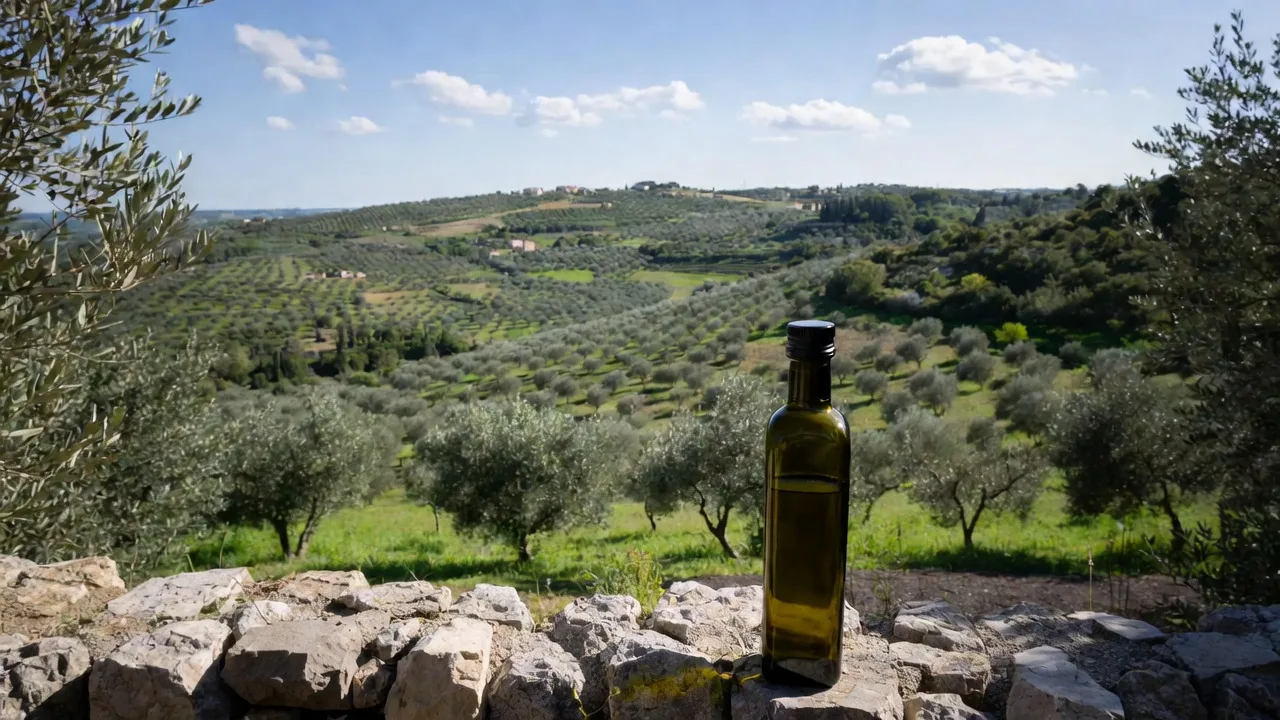
Puglia olive oil dominates Italian production like no other region. The heel of Italy's boot produces approximately 40% of the country's total olive oil output — over 100 million liters in a good harvest year. Puglia's 60 million olive trees, many over 500 years old, span a landscape of red earth, limestone, and relentless Adriatic sun. The region's flagship variety — Coratina — delivers some of the most intensely flavored, polyphenol-rich EVOOs on the planet. This is everything you need to know about Puglia olive oil: varieties, sub-regions, DOP certifications, top producers, and how to buy the real thing.
Why Puglia Olive Oil Dominates Italy
Three factors explain why Puglia olive oil represents nearly half of Italian production.
Scale: Puglia has more olive trees than any other Italian region — approximately 60 million across 380,000 hectares. The flat terrain of the Tavoliere plain and the gently rolling hills of the Murge plateau allow mechanized harvesting at scale. Many Puglia olive oil operations combine traditional groves with modern extraction technology, producing consistent quality at volume.
Climate: Puglia's semi-arid Mediterranean climate — hot, dry summers and mild, short winters — is ideal for olive cultivation. Annual rainfall is low (400-600mm), concentrated in autumn and winter. The summer drought stresses olive trees into producing smaller, more concentrated fruit with higher polyphenol levels. Constant wind from the Adriatic keeps humidity low, reducing disease pressure.
Heritage: Greek colonists planted Puglia's first olive groves over 2,500 years ago. The region's monumental olive trees — gnarled, massive specimens with trunks 3-4 meters in circumference — are living UNESCO-recognized heritage. Puglia olive oil production is not a modern industry; it's an ancient practice refined across 100+ generations.
Puglia Olive Oil Varieties
Coratina — The Powerhouse
Coratina is Puglia olive oil's most important variety and one of the world's highest-polyphenol cultivars. Named after the town of Corato in the province of Bari, Coratina produces oil with extreme bitterness, aggressive pepperiness, and polyphenol levels that routinely exceed 500mg/kg — with elite early-harvest examples reaching 800-1000mg/kg.
Tasting profile: intense green herbaceous notes (artichoke, fresh-cut grass, green tomato), pronounced bitter almond, and a strong oleocanthal burn at the back of the throat. This is not a gentle oil. Coratina-based Puglia olive oil is for people who want maximum flavor and maximum health impact. Comparable in intensity to Greek Koroneiki, but with a distinctly Italian aromatic character.
Ogliarola Barese — The Everyday Oil
Ogliarola Barese is Puglia's volume variety — accounting for the largest share of planted hectares. It produces a milder, fruitier Puglia olive oil with moderate bitterness and a gentle almond finish. Polyphenol content is lower than Coratina (200-350mg/kg) but the flavor is more approachable and versatile. This is the Puglia olive oil for daily cooking, dipping, and dressings — it works with everything without overpowering delicate ingredients.
Cellina di Nardò — The Salento Specialty
Cellina dominates the Salento peninsula at Puglia's southern tip. It produces Puglia olive oil with a distinctive sweet, fruity character — notes of ripe tomato, pine nut, and dried herbs. Lower bitterness and pepper than Coratina, making it popular for finishing fish, seafood, and raw vegetable preparations. The ancient Cellina trees of Salento — some documented at over 1,000 years old — are among Italy's most photographed agricultural landmarks.
Peranzana — The Northern Gem
Peranzana grows in the Foggia province of northern Puglia. It produces an elegant, delicate Puglia olive oil with apple, almond, and fresh herb notes. Lower yield per tree but exceptional aromatic complexity. Peranzana-based oils are gaining international recognition — several have won gold at the NYIOOC World Olive Oil Competition.
Puglia Olive Oil DOP Designations
Puglia has five DOP (Denominazione di Origine Protetta) designations — more than any other Italian region. Each DOP defines specific geographic boundaries, permitted varieties, and quality standards.
- Terra di Bari DOP: Covers the province of Bari — Coratina and Ogliarola dominant. Three sub-zones: Castel del Monte, Bitonto, and Murgia dei Trulli e delle Grotte. This is the DOP for high-polyphenol, intense Puglia olive oil.
- Collina di Brindisi DOP: Ogliarola and Cellina from the Brindisi hills. Medium-intensity oils with good balance between fruitiness and bitterness.
- Terra d'Otranto DOP: Cellina and Ogliarola from the Salento peninsula. Fruity, mild, elegant Puglia olive oil — ideal for fish and seafood.
- Dauno DOP: Covers Foggia province in northern Puglia. Peranzana and Ogliarola. Delicate, aromatic, lower intensity. Four sub-zones with distinct terroir signatures.
- Terre Tarentine DOP: From the area around Taranto. Leccino and Coratina blends producing balanced, medium-intensity oils.
The DOP label on Puglia olive oil guarantees regional authenticity, variety compliance, and minimum quality standards monitored by the Italian Ministry of Agriculture. If you see a Puglia DOP seal, the oil is genuine.
Puglia Olive Oil Health Benefits
Puglia olive oil — particularly Coratina-based oils — delivers exceptional health value tied directly to its polyphenol intensity.
Oleocanthal concentration: Coratina olive oil's extreme pepperiness signals very high oleocanthal content. This natural anti-inflammatory compound, identified by researchers and published in Nature, acts as a COX-2 inhibitor with potency comparable to ibuprofen. Two tablespoons of high-polyphenol Puglia olive oil deliver a meaningful anti-inflammatory dose.
EFSA health claim: Premium Puglia olive oil from Coratina easily meets the EFSA threshold for the EU-authorized health claim: olive oil polyphenols "contribute to the protection of blood lipids from oxidative stress." The required 5mg of hydroxytyrosol per 20g of oil is comfortably exceeded by most quality Coratina EVOOs.
Oleic acid: Puglia olive oil typically contains 72-80% oleic acid — the monounsaturated fat that drives cardiovascular benefits documented in the PREDIMED trial. Combined with high polyphenol content, Coratina-based Puglia olive oil is among the most health-dense oils available.
Fatty acid balance: Puglia olive oil's omega-6 to omega-3 ratio falls in the 10-12:1 range — not perfect, but dramatically better than seed oils and consistent with the Mediterranean dietary pattern associated with lower chronic disease risk.
Top Puglia Olive Oil Producers
- Galantino: Family estate in Bisceglie since 1926. Their Monet DOP (Coratina) consistently delivers 500mg/kg+ polyphenols. Beautifully packaged, widely exported. $20-35 per 500ml.
- Ferrara Guiliano: Small artisanal producer in the Murge hills. Single-variety Coratina, early harvest, extremely intense. Limited production — worth seeking out. $25-40 per 500ml.
- Intini: Organic Puglia olive oil from Alberobello (the trulli town). Coratina and Ogliarola blend. DOP Terra di Bari certified. $18-28 per 500ml.
- Ciccolella: Large cooperative near Foggia producing excellent Peranzana-based oils. Good value for everyday Puglia olive oil. $12-20 per 500ml.
- Ferrara Sac. Nicola: Historic producer from Molfetta. Their "Gran Cru" Coratina is a competition-winning powerhouse. $30-45 per 500ml.
Puglia Olive Oil in the Kitchen
Orecchiette with Puglia Olive Oil
Puglia's signature pasta demands Puglia olive oil. Cook orecchiette until al dente. In a large pan, heat 4 tablespoons of Puglia olive oil with 3 garlic cloves and a pinch of chili flakes. Add blanched broccoli rabe (cime di rapa), toss with the pasta and a splash of pasta water. Finish with more raw Puglia olive oil and shaved pecorino. The oil is the sauce — it must be good.
Frisella with Puglia Olive Oil
Frisella is Puglia's ancient twice-baked bread, dipped briefly in water to soften, then topped with chopped tomatoes, oregano, salt, and a generous pour of Puglia olive oil. This is the original Mediterranean fast food — field workers' lunch for centuries. The oil soaks into the bread's craggy surface, delivering flavor in every bite.
Raw Finishing
Coratina-based Puglia olive oil shines brightest when used raw: drizzled over burrata, grilled octopus, white bean soup, or simply with crusty Altamura bread. The intense bitterness and peppery burn transform simple ingredients into complex dishes. Two tablespoons per serving — this is how Pugliesi eat, and their longevity statistics suggest it works.
Puglia Olive Oil vs. Other Italian Regions
vs. Sicilian olive oil: Sicily's Nocellara produces rounder, more balanced oils with moderate bitterness. Puglia olive oil (Coratina) hits harder — more aggressive bitterness and pepper. Sicily offers elegance; Puglia delivers intensity.
vs. Tuscan olive oil: Tuscany's Frantoio, Moraiolo, and Leccino blends produce oils with sophisticated herbaceous notes and balanced bitterness. Puglia olive oil is generally bolder and more pungent. Tuscan EVOO costs significantly more — Puglia offers superior polyphenol levels at lower prices.
vs. Ligurian olive oil: Liguria's Taggiasca variety produces delicate, sweet, almost buttery oils — the opposite end of the spectrum from Puglia olive oil's assertive Coratina character. Different tools for different jobs.
The Xylella Challenge
Since 2013, Puglia olive oil production has faced a serious threat: Xylella fastidiosa, a bacterial disease that has killed millions of olive trees in the Salento sub-region. The EFSA has monitored the outbreak extensively. The disease is spread by insect vectors and has no cure — infected trees must be removed.
The impact on Puglia olive oil has been devastating in Salento (Cellina and Ogliarola varieties are highly susceptible) but limited in northern Puglia (Coratina shows greater resistance). Italian and EU authorities have invested in replanting programs using resistant varieties. If you buy Puglia olive oil from the Bari or Foggia provinces, production is largely unaffected.
How to Buy Authentic Puglia Olive Oil
Look for DOP certification, harvest dates, named varieties, and producer addresses in Puglia. Store in dark bottles away from heat. Expect to pay $15-35 per 500ml for quality Puglia olive oil at export retail. Anything labeled "Italian olive oil" without regional specification is likely a multi-origin blend — not the same product. Coratina on the label signals maximum intensity and polyphenol content. Ogliarola or Peranzana signal gentler, more versatile daily-use Puglia olive oil.