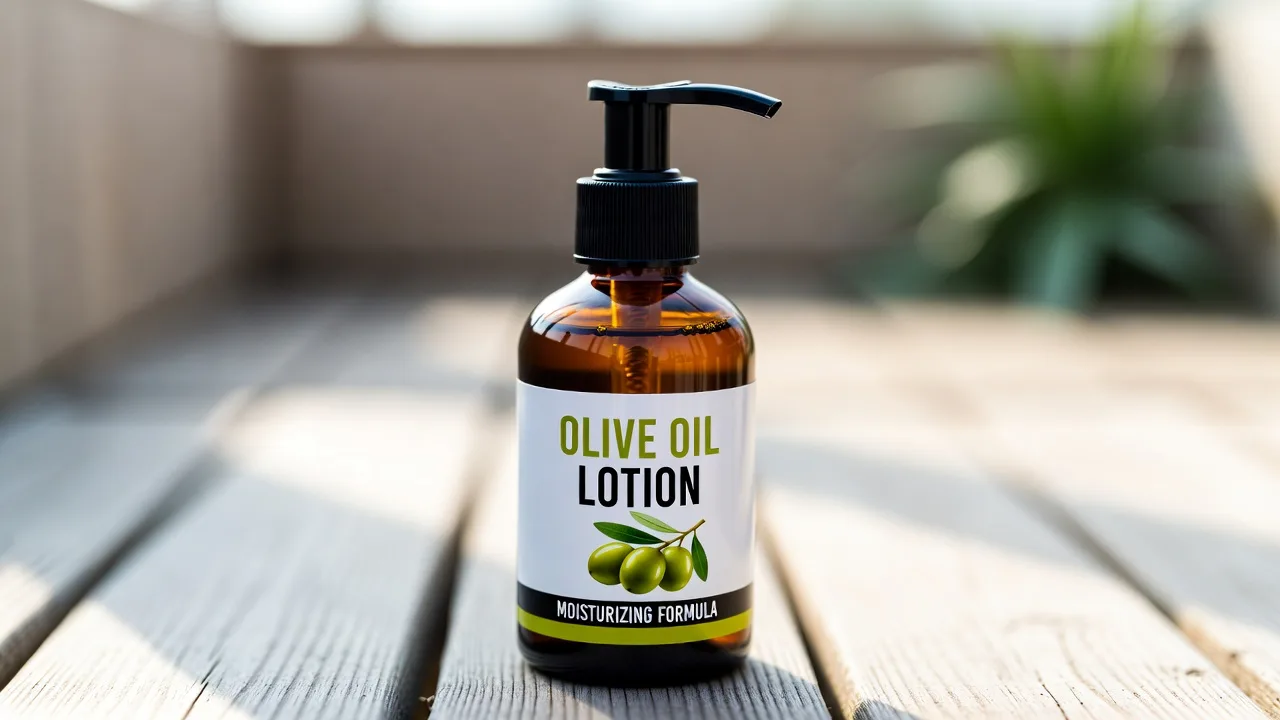
Olive oil lotion combines the deep moisturizing power of olive oil with the lightweight, fast-absorbing texture of a modern lotion. Pure olive oil is an extraordinary skin treatment — packed with oleic acid, squalene, vitamin E, and polyphenols — but it's heavy, slow to absorb, and can feel greasy on daily application. Olive oil lotion solves this by emulsifying olive oil with water and structuring agents, delivering all the bioactives in a formulation your skin absorbs in seconds. The result: Mediterranean-level skin nourishment without the oil slick.
Why Olive Oil Lotion Works Better Than Pure Olive Oil
Applying straight olive oil to skin is an ancient practice — and it works. But olive oil lotion improves on the raw oil in several measurable ways.
Absorption speed: Pure olive oil sits on the skin surface for 15-30 minutes before full absorption. Olive oil lotion absorbs in 30-60 seconds because the emulsion breaks olive oil into microscopic droplets suspended in water. These tiny droplets penetrate the stratum corneum (outer skin layer) far more efficiently than bulk oil.
Non-greasy finish: Olive oil lotion dries to a matte or semi-matte finish within minutes. Pure olive oil leaves a persistent sheen that transfers to clothing, sheets, and furniture. For daily use — hands, arms, legs, face — olive oil lotion is simply more practical.
Hydration + moisturization: This is the critical distinction. Oil moisturizes (prevents water loss) but doesn't hydrate (add water to skin). Water hydrates but evaporates quickly. Olive oil lotion delivers both simultaneously — water hydrates the skin cells while olive oil seals that hydration in. This dual-action approach produces measurably better skin hydration than either water or oil alone, as documented in the International Journal of Cosmetic Science.
Reduced comedogenicity: Pure olive oil has a comedogenic rating of 2 (moderately likely to clog pores). Olive oil lotion dilutes the oleic acid concentration enough to reduce pore-clogging potential significantly. Many people who break out from pure olive oil tolerate olive oil lotion without issues.

Olive Oil Lotion: Key Ingredients to Look For
Not all olive oil lotions are created equal. The best formulations contain these olive-derived and complementary ingredients:
Olea Europaea (Olive) Fruit Oil: The source of oleic acid, polyphenols, squalene, and vitamin E. This should be listed in the top 5 ingredients of any olive oil lotion — lower placement means negligible olive oil content. Some brands list "olive oil" prominently on packaging but bury it at position 15+ in the ingredient list. That's marketing, not formulation.
Squalane (olive-derived): Squalane is the hydrogenated, stable form of squalene — naturally present in olive oil. It's lightweight, non-comedogenic (rating 0-1), and mimics the skin's own sebum composition. Olive oil lotion with added squalane delivers enhanced barrier repair without greasiness. Look for "olive squalane" or "plant-derived squalane" on the label.
Hydroxytyrosol: The most potent antioxidant in olive oil — 10x more powerful than vitamin C by ORAC measurement. Premium olive oil lotion formulations include concentrated hydroxytyrosol extract for anti-aging benefits beyond what standard olive oil delivers.
Glycerin: A humectant that draws moisture into the skin. Combined with olive oil's occlusive (moisture-sealing) properties, glycerin + olive oil lotion creates the ideal hydration-moisture lock system.
Shea butter: Adds richness and additional fatty acids (stearic, oleic) that complement olive oil's profile. Olive oil lotion with shea butter is particularly effective for very dry skin, eczema-prone skin, and winter skincare.
Aloe vera: Provides lightweight hydration, anti-inflammatory soothing, and a fresh skin feel. Excellent companion ingredient in olive oil lotion formulated for after-sun care or sensitive skin.
Best Olive Oil Lotions: Top Picks
Body Lotions
- Kiehl's Olive Fruit Oil Nourishing Body Lotion: Premium formulation with cold-pressed olive oil extract and squalane. Rich but not greasy. Absorbs well, leaves skin silky. Light citrus-herbal scent. $32/200ml. The best mainstream olive oil lotion for daily body use.
- DHC Olive Virgin Oil Body Lotion: Japanese brand using Spanish organic EVOO. Lightweight, fast-absorbing, fragrance-free. Excellent for sensitive skin. $24/200ml. Great olive oil lotion for people who dislike heavy products.
- Athena Olive Oil Body Lotion: Greek-made with Koroneiki olive oil from the Peloponnese. Rich, traditional formulation with real olive oil character. $18/250ml. Authentic Mediterranean olive oil lotion at a fair price.
- Le Petit Marseillais Olive Oil Body Lotion: French pharmacy staple made with Provençal olive oil. Widely available in Europe, increasingly in the US. Lightweight, pleasant scent. $10/250ml. Best budget olive oil lotion.
Hand Lotions
- Crabtree & Evelyn La Source Olive Oil Hand Therapy: Ultra-rich hand cream with olive oil, macadamia, and shea. Thick texture designed for heavy-duty hand repair. $18/100ml. Ideal olive oil lotion for cracked winter hands.
- Nesti Dante Dal Frantoio Olive Oil Hand Cream: Italian artisanal brand using Tuscan olive oil. Beautiful packaging, genuinely olive oil-rich formulation. $14/150ml. A gift-worthy olive oil lotion.
Face Lotions
- Origins Plantscription SPF 25 with Olive-Derived Squalane: Anti-aging face lotion with olive squalane, peptides, and broad-spectrum SPF. Lightweight, non-comedogenic. $52/50ml. Premium olive oil lotion for facial anti-aging.
- The Ordinary Plant-Derived Squalane: Not a lotion technically — pure olive squalane oil. But at $8/30ml, it's the most affordable way to get olive-derived skin benefits for the face. Mix 2-3 drops into your existing moisturizer to create a custom olive oil lotion.
DIY Olive Oil Lotion Recipes
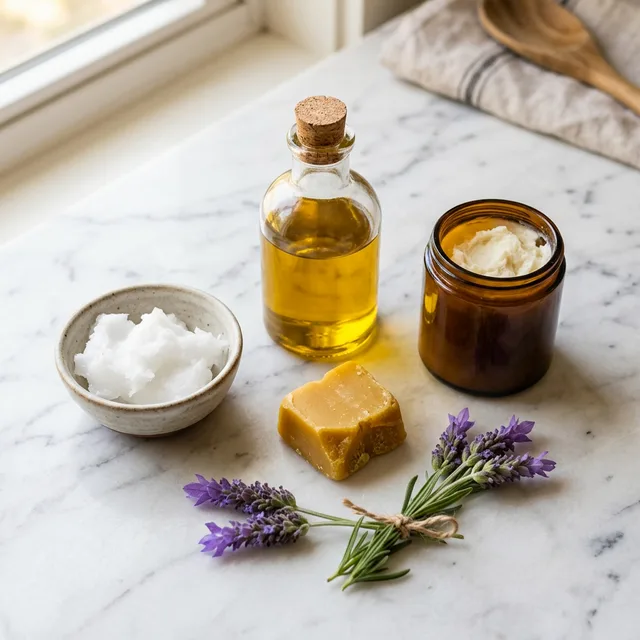
Basic Olive Oil Body Lotion
- 1/2 cup extra virgin olive oil
- 1/4 cup coconut oil
- 1/4 cup beeswax pellets (or candelilla wax for vegan version)
- 10 drops essential oil of choice (lavender, rosemary, or citrus)
- 1 tablespoon vitamin E oil
Melt coconut oil and beeswax in a double boiler over low heat. Remove from heat and stir in olive oil and vitamin E oil. Add essential oils. Pour into a clean glass jar. Let cool and solidify at room temperature (2-3 hours). This olive oil lotion has a body-butter consistency — thick, rich, and deeply moisturizing. Shelf life: 3-6 months stored in a cool, dark location.
Whipped Olive Oil Lotion
- 1/2 cup shea butter
- 1/4 cup extra virgin olive oil
- 2 tablespoons jojoba oil
- 1 tablespoon arrowroot powder (reduces greasiness)
- 8 drops essential oil
Melt shea butter gently in a double boiler. Remove from heat, stir in olive oil and jojoba oil. Refrigerate for 30 minutes until partially solidified (consistency of soft butter). Add arrowroot powder and essential oils. Whip with a hand mixer for 3-5 minutes until light and fluffy. Transfer to a jar. This whipped olive oil lotion feels like a cloud — airy, lightweight, and absorbs faster than the basic version. Excellent for summer use.
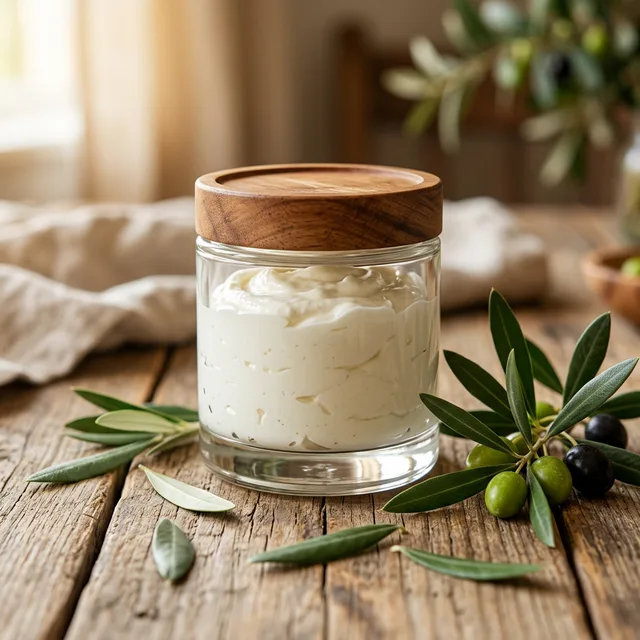
After-Sun Olive Oil Lotion
- 1/4 cup EVOO
- 1/4 cup aloe vera gel
- 1 tablespoon cocoa butter (melted)
- 5 drops peppermint essential oil (cooling sensation)
- 5 drops lavender essential oil (calming)
Blend all ingredients in a blender for 30 seconds until smooth and emulsified. Store in a glass bottle in the refrigerator. Apply generously after sun exposure. The cold olive oil lotion provides immediate cooling relief, and the olive oil polyphenols begin anti-inflammatory work on UV-damaged skin. Use within 2 weeks (no preservatives).
Olive Oil Lotion for Specific Skin Conditions
Eczema: Olive oil lotion is particularly effective for eczema-prone skin. The oleic acid restores the lipid barrier that eczema disrupts, reducing transepidermal water loss (TEWL). Research published in the Journal of the American Academy of Dermatology supports plant oil emollients for atopic dermatitis management. Choose fragrance-free olive oil lotion for eczema — fragrances can trigger flares.
Psoriasis: The anti-inflammatory polyphenols in olive oil lotion — particularly oleocanthal — may help reduce psoriatic inflammation when applied topically. Olive oil lotion won't replace prescription treatments but can complement them as a moisturizing barrier therapy between medicated applications.
Aging skin: Hydroxytyrosol in olive oil lotion protects against collagen degradation caused by UV exposure and oxidative stress. Regular application of antioxidant-rich olive oil lotion may slow visible aging markers — fine lines, loss of elasticity, uneven pigmentation. The Journal of Cosmetic Dermatology has published multiple studies supporting topical polyphenols for photoaging prevention.
Dry hands: Healthcare workers, restaurant staff, gardeners, and anyone washing hands frequently suffer chronic hand dehydration. Olive oil lotion applied after each hand wash creates a lipid barrier that buying time against the next wash. Keep an olive oil hand lotion at every sink.
Stretch marks: While no topical product can eliminate established stretch marks, olive oil lotion applied during pregnancy or rapid weight change may reduce their severity. The oleic acid improves skin elasticity, and vitamin E supports tissue repair. Apply olive oil lotion twice daily to abdomen, thighs, and breasts during pregnancy's second and third trimesters.
Olive Oil Lotion vs. Other Natural Lotions
vs. Coconut oil lotion: Coconut oil is lighter and absorbs faster but has a comedogenic rating of 4 (high pore-clogging risk). Olive oil lotion is better for facial use and acne-prone body areas. Coconut oil lotion lacks the polyphenol antioxidants that distinguish olive oil lotion.
vs. Shea butter lotion: Shea butter is richer and more occlusive — better for extremely dry skin and harsh winter conditions. Olive oil lotion offers superior antioxidant protection and better absorption. The ideal combination uses both — shea butter for texture and olive oil lotion for bioactives.
vs. Argan oil lotion: Argan oil is excellent for skin but costs 3-5x more than olive oil. The polyphenol profiles are different — argan oil is rich in ferulic acid; olive oil lotion delivers hydroxytyrosol and oleocanthal. Both are effective; olive oil lotion offers better value.
vs. Petroleum-based lotions: Petroleum jelly and mineral oil are effective moisture-sealers but provide zero bioactive compounds — no antioxidants, no anti-inflammatory agents, no vitamins. Olive oil lotion is a functional skincare treatment; petroleum-based products are passive barriers. The difference compounds over months and years of daily use.
Olive Oil Lotion: Choosing the Right One
Match your olive oil lotion to your skin's needs. Dry skin benefits from rich olive oil lotion with shea butter and beeswax. Oily skin responds better to lightweight olive oil lotion with squalane and aloe — or skip lotion entirely and use pure olive squalane. Sensitive skin needs fragrance-free olive oil lotion without essential oils or synthetic fragrances. Aging skin should prioritize olive oil lotion with concentrated polyphenol extracts and SPF for daytime use. Every skin type benefits from olive oil's unique combination of oleic acid barrier repair, squalene compatibility with human sebum, and polyphenol antioxidant defense. Find the right texture, and olive oil lotion becomes the only body moisturizer you need.