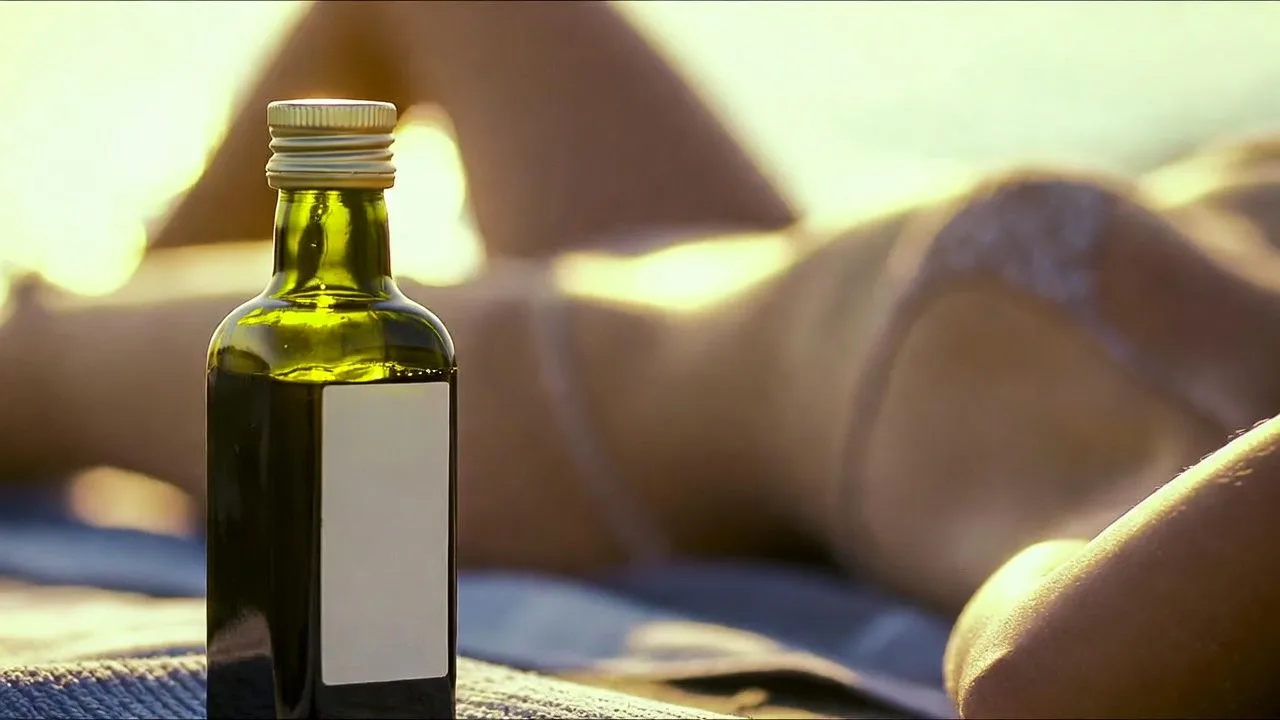
Olive oil for sunbathing is one of the oldest tanning traditions in the Mediterranean. Greek, Italian, and North African sunbathers have applied olive oil before sun exposure for centuries — long before commercial sunscreen existed. The practice persists because olive oil for sunbathing delivers real skin benefits: deep moisturization, antioxidant protection, and a golden, even tan. But olive oil is NOT sunscreen. Its SPF is minimal. Using olive oil for sunbathing without understanding the limitations can result in serious sunburn. Here's the honest, science-based guide.
Olive Oil for Sunbathing: The SPF Reality
Olive oil for sunbathing provides some UV protection — but far less than any commercial sunscreen.
Research published in the Journal of Pharmacognosy and Phytochemistry measured the SPF of various plant oils. Olive oil registered an SPF of approximately 7-8. For context:
- Olive oil: SPF ~7-8 (blocks approximately 85% of UVB rays)
- Coconut oil: SPF ~7 (blocks ~85%)
- Sesame oil: SPF ~2 (blocks ~50%)
- Commercial SPF 30: blocks 97% of UVB rays
- Commercial SPF 50: blocks 98% of UVB rays
An SPF of 7-8 means olive oil for sunbathing extends your burn time by roughly 7-8x. If you'd normally burn in 15 minutes without protection, olive oil gives you approximately 100-120 minutes before burning. That's meaningful but NOT adequate for extended beach sessions, and it provides minimal UVA protection (the rays responsible for premature aging and melanoma risk).
The American Academy of Dermatology recommends a minimum of SPF 30 for sun protection. Olive oil for sunbathing does not meet this standard. It should be considered a skin conditioning treatment that happens to include mild UV filtering — not a sunscreen replacement.
Why Olive Oil for Sunbathing Works for Tanning
Despite the low SPF, olive oil for sunbathing is effective as a tanning aid. Here's why:
UV transmission with moisturization: Olive oil for sunbathing allows most UV radiation through to stimulate melanin production (tanning) while keeping the skin deeply moisturized. UV rays damage dry, dehydrated skin more severely than well-moisturized skin. The oleic acid in olive oil creates a lipid barrier that maintains skin hydration during sun exposure, reducing the likelihood of peeling and promoting even melanin distribution.
Antioxidant protection: The polyphenols in extra virgin olive oil — particularly hydroxytyrosol and tyrosol — provide antioxidant defense against UV-generated free radicals. Research from the Journal of Dermatological Science confirms that topical antioxidants reduce oxidative DNA damage from UV exposure. This doesn't prevent sunburn, but it may reduce the long-term cellular damage that accumulates with sun exposure.
Squalene content: Olive oil contains 200-500mg/kg of squalene — a compound naturally present in human sebum. Squalene is a natural UV absorber. When applied topically via olive oil for sunbathing, squalene contributes to the oil's mild SPF while reinforcing the skin's natural photoprotective mechanisms.
Golden color enhancement: Olive oil for sunbathing creates a light-reflective sheen on the skin that enhances the visual warmth of a developing tan. The oil's golden-green tint adds subtle warm undertones to the skin's appearance — making the tan look deeper and more even than it actually is. This cosmetic effect is one reason olive oil for sunbathing remains popular despite minimal actual UV protection.
Olive Oil for Sunbathing: How to Apply Safely
The Mediterranean Method
Traditional olive oil for sunbathing follows a specific protocol that minimizes risk:
- Apply sunscreen first. This is the modern adaptation. Apply SPF 30+ sunscreen 20 minutes before sun exposure. Let it absorb completely.
- Apply olive oil over sunscreen. Pour a tablespoon of EVOO into your palms, rub together, and apply in long, even strokes over the sunscreen layer. The olive oil adds moisturization and sheen without interfering with the sunscreen's UV-blocking function.
- Reapply olive oil every 60-90 minutes. The oil absorbs and evaporates during sun exposure. Reapply to maintain skin hydration. Reapply sunscreen every 2 hours as directed.
- Limit sun exposure. Even with olive oil for sunbathing over sunscreen, limit direct midday sun (11am-3pm) to 30-60 minutes. Build your tan gradually over multiple sessions.
The Traditional (No-Sunscreen) Method
The classic Mediterranean olive oil for sunbathing method used no sunscreen — just olive oil directly on skin. This approach is only advisable for:
- People with naturally dark skin (Fitzpatrick types IV-VI) who rarely burn
- Short exposure sessions (under 30 minutes)
- Early morning or late afternoon sun (before 11am or after 4pm) when UV index is lower
- Gradual tan-building over weeks rather than single intense sessions
If you have fair skin (Fitzpatrick types I-II), using olive oil for sunbathing without sunscreen is NOT recommended. Your burn time with olive oil's SPF 7-8 is still far shorter than a beach session, and the consequences of UV overexposure — sunburn, premature aging, skin cancer risk — outweigh the tanning benefits.
Olive Oil for Sunbathing: Which Oil to Choose
Not all olive oil works equally for sunbathing. Choose wisely:
Best: Extra virgin olive oil. Cold-pressed EVOO retains the highest polyphenol and squalene content — maximizing the antioxidant and UV-absorbing benefits. Early harvest EVOO with the highest polyphenol levels provides the most antioxidant protection per application. The drawback: EVOO has a noticeable olive scent that some sunbathers dislike.
Acceptable: Virgin olive oil. Slightly lower polyphenol content but still retains meaningful antioxidant compounds. Milder scent than EVOO.
Avoid: Refined/"light" olive oil. Refining strips virtually all polyphenols and squalene — the compounds that give olive oil its skin-protective properties. Refined olive oil for sunbathing is just a generic moisturizer with no specific advantage over any other oil.
Avoid: Pomace olive oil. Solvent-extracted, low-quality oil with no meaningful bioactive compounds. Not suitable for skin application.
Olive Oil for Sunbathing: Skin Benefits Beyond Tanning
Using olive oil for sunbathing delivers skin benefits that pure sunscreen doesn't:
Deep moisturization: Sun exposure dehydrates skin through transepidermal water loss (TEWL). Olive oil's oleic acid penetrates the stratum corneum (outer skin layer) and forms a moisture-retaining barrier. Research confirms that olive oil application reduces TEWL by 20-30% — keeping skin plump and hydrated during and after sun exposure.
Anti-aging defense: UV radiation generates reactive oxygen species (ROS) — free radicals that damage collagen, elastin, and DNA. The hydroxytyrosol in olive oil for sunbathing neutralizes ROS on contact, providing a topical antioxidant shield that supplements the skin's own defense mechanisms. Studies in the British Journal of Dermatology demonstrate that topical antioxidants reduce UV-induced photoaging markers.
Reduced peeling: Sunburned, dry skin peels because the damaged outer layer loses adhesion. Olive oil for sunbathing prevents the extreme dehydration that causes peeling. Well-moisturized sun-exposed skin retains its tan longer because the melanin-containing cells aren't shed prematurely through dryness-driven peeling.
Skin repair compounds: Vitamin E in olive oil (14% DV per tablespoon when consumed, also bioavailable topically) supports skin cell membrane repair. Squalane — the stabilized form of squalene — is used in luxury skincare specifically for post-sun recovery. Olive oil delivers both naturally.
Olive Oil for Sunbathing: After-Sun Care
Olive oil for sunbathing is arguably more valuable as an after-sun treatment than as a pre-sun application.
Immediate after-sun: After showering off salt, sand, and sunscreen residue, apply a thin layer of EVOO to still-damp skin. The oil locks in shower moisture and begins replenishing lipids depleted by UV exposure. Focus on the most sun-exposed areas: shoulders, face, chest, and shins.
Sunburn recovery: Mild sunburn responds well to olive oil treatment. The anti-inflammatory oleocanthal in high-polyphenol EVOO reduces redness and pain. Apply every 4-6 hours for the first 48 hours after sunburn. Olive oil won't cure severe sunburn (seek medical attention for blistering burns), but it accelerates recovery for mild-to-moderate overexposure.
Tan maintenance: Daily olive oil application after sun exposure maintains skin hydration and prevents premature tanning loss through peeling. Apply nightly after showering throughout your beach holiday. Your tan will develop more evenly and last 30-50% longer than untreated skin.
DIY after-sun blend: Mix 3 tablespoons EVOO with 1 tablespoon aloe vera gel and 5 drops of lavender essential oil. Apply generously after sun exposure. The aloe vera adds cooling sensation and additional anti-inflammatory benefit, the lavender provides calming aromatherapy, and the olive oil delivers deep moisturization and antioxidant protection.
Olive Oil for Sunbathing: The Ancient Greek Connection
Olive oil for sunbathing isn't a modern trend — it's one of humanity's oldest skincare practices. Ancient Greek athletes applied olive oil before training outdoors, both for muscular flexibility and sun protection. The practice was so universal that public olive oil dispensers were installed at Greek gymnasiums. Roman-era sunbathers in the Mediterranean used olive oil mixed with beeswax as a primitive sunscreen — the wax added water resistance while the oil provided skin conditioning.
Moroccan and Lebanese traditions include rubbing olive oil on children's skin before outdoor play — a practice that persists in rural communities today. The empirical observation that olive oil-treated skin burns less severely than untreated skin has been validated by modern SPF testing, confirming what Mediterranean cultures knew instinctively for millennia.
Olive Oil for Sunbathing: Honest Risks
- Inadequate UV protection for fair skin: SPF 7-8 is insufficient for Fitzpatrick types I-III in strong sun. Always layer sunscreen underneath.
- Potential for pore clogging: Olive oil's comedogenic rating of 2 means some people — particularly those with oily or acne-prone skin — may experience breakouts from applying olive oil to the face during sun exposure. Use olive oil for sunbathing on the body only if you're breakout-prone.
- Staining: Olive oil can stain swimwear, towels, and beach furniture. Use light-colored or dedicated beach towels when applying olive oil for sunbathing.
- Attracting sand: Oiled skin collects sand more aggressively than dry skin. Rinse before reapplying.
- No water resistance: Unlike formulated sunscreens, olive oil for sunbathing washes off immediately in water. Reapply after every swim.
Olive Oil for Sunbathing: The Smart Approach
Olive oil for sunbathing is a legitimate skincare practice with real benefits — but it's a tanning aid and skin conditioner, not a sunscreen substitute. Use SPF 30+ as your primary UV protection. Layer olive oil on top for moisturization, antioxidant defense, and that golden Mediterranean sheen. Apply generously after sun exposure for recovery and tan longevity. Choose cold-pressed EVOO for maximum polyphenol content. And respect the sun — beautiful skin requires protection and nourishment in equal measure.