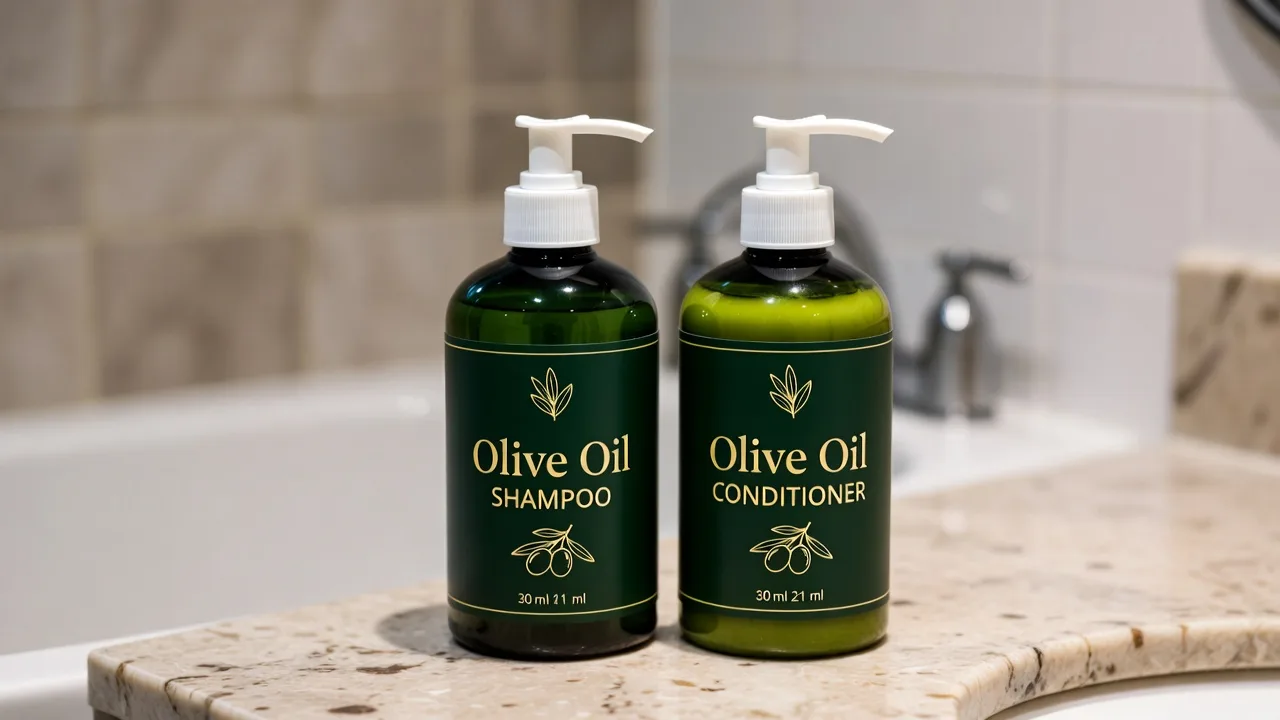
Olive oil shampoo and conditioner deliver what synthetic hair products promise but rarely achieve — deep moisture, genuine frizz control, scalp nourishment, and hair that feels naturally healthy rather than chemically coated. The oleic acid, squalene, and vitamin E in olive oil penetrate the hair shaft in ways that silicone-based products only mimic on the surface. Whether you buy a commercial olive oil shampoo and conditioner set or make your own, the core science is the same: olive oil's lipid profile is uniquely compatible with human hair and scalp biology.
How Olive Oil Shampoo and Conditioner Work
Olive oil shampoo and conditioner function through different mechanisms — understanding both helps you choose the right products.
Olive Oil Shampoo: Gentle Cleansing
Olive oil shampoo uses saponified or emulsified olive oil as its cleansing base instead of harsh synthetic sulfates (SLS/SLES). The saponification process transforms olive oil's fatty acids into sodium oleate — a mild surfactant that removes dirt and excess sebum without stripping the hair's natural protective lipid layer.
Standard sulfate shampoos clean aggressively — dissolving virtually all oils from the hair and scalp. This leaves hair temporarily "squeaky clean" but triggers rebound oil production and long-term dryness. Olive oil shampoo and conditioner systems work differently. The olive-derived surfactants are selective — they remove environmental grime and product buildup while leaving a thin protective oleic acid layer on the hair shaft.
Research from the International Journal of Cosmetic Science confirms that olive oil-based cleansers maintain scalp pH better than SLS-based alternatives — reducing irritation, dandruff, and inflammatory scalp conditions.
Olive Oil Conditioner: Deep Penetration
Olive oil conditioner delivers the real magic. Unlike silicone-based conditioners that coat the hair surface with a synthetic film (creating the illusion of smoothness), olive oil's small molecular structure allows it to penetrate the hair cortex — the structural layer beneath the cuticle.
A landmark study published in the Journal of Cosmetic Science compared coconut oil, mineral oil, and sunflower oil for hair penetration. The monounsaturated fatty acid structure (dominant in olive oil, similar to coconut oil's lauric acid) showed the deepest penetration and greatest protein loss reduction. Olive oil conditioner reduces hygral fatigue — the repeated swelling-and-drying cycle that weakens hair over time.
Benefits of Olive Oil Shampoo and Conditioner
Frizz control: Frizz occurs when dry, porous hair absorbs excess humidity from the air. Olive oil shampoo and conditioner reduce porosity by filling gaps in the cuticle layer with oleic acid molecules. The result: hair that lies smoother, reflects more light, and resists humidity-driven frizz. This benefit is particularly dramatic for curly and coily hair types.
Scalp health: Olive oil's anti-inflammatory polyphenols — the same oleocanthal and hydroxytyrosol that provide health benefits when consumed — calm irritated scalps. Regular use of olive oil shampoo and conditioner can reduce itching, flaking, and seborrheic dermatitis symptoms. The American Academy of Dermatology recommends gentle, non-stripping cleansers for dandruff management — olive oil shampoo qualifies.
Split end prevention: Split ends form when the hair's protective cuticle layer wears away, exposing the inner cortex to mechanical damage. Olive oil conditioner reinforces the cuticle with a natural lipid layer, reducing friction between hair strands and slowing split-end progression. It won't repair existing splits (nothing can short of cutting), but it prevents new ones.
Color protection: Sulfate shampoos are notorious for stripping hair color — both natural and dyed. Olive oil shampoo and conditioner are sulfate-free by nature, making them excellent for color-treated hair. The gentle cleansing preserves pigment molecules within the cortex, extending time between color appointments.
Heat damage recovery: Regular blow-drying, flat-ironing, and curling depletes the hair's natural lipid content. Olive oil shampoo and conditioner replenish those lipids with every wash, counteracting cumulative heat damage. Use before heat styling as a protective pre-treatment — the oleic acid layer reduces thermal water loss from the hair shaft.
Best Olive Oil Shampoo and Conditioner Brands
Not all olive oil shampoo and conditioner products are equal. Many use minimal olive oil as a marketing ingredient while relying on the same sulfates and silicones as conventional products. Here are the brands that actually deliver:
- CHI Olive Organics: Professional-grade olive oil shampoo and conditioner. Certified organic olive oil as a primary ingredient, sulfate-free, silicone-free. Excellent for dry, damaged, and color-treated hair. $18-24 per 340ml bottle.
- Klorane Olive Extract Shampoo: French pharmacy brand using Corsican olive extract. Focuses on restoring thickness and vitality to aging, thinning hair. Paired with their olive conditioner for a complete system. $14-20 per 400ml.
- Olivella Shampoo and Conditioner: 100% virgin olive oil-based. No SLS, no parabens, no synthetic fragrances. Italian-made with a focus on simplicity — olive oil plus essential botanical extracts. $10-16 per 500ml. Excellent value.
- ORS Olive Oil Shampoo: Designed specifically for natural Black hair textures. Olive oil shampoo and conditioner formulated for moisture retention in coily and kinky hair that's naturally prone to dryness. Widely available and affordable at $6-10 per 370ml.
- Palmer's Olive Oil Formula: Budget-friendly olive oil shampoo and conditioner with added vitamin E and keratin. Good everyday option for all hair types. Available at most drugstores. $5-8 per 400ml.
What to Look for on Labels
When shopping for olive oil shampoo and conditioner, read the ingredient list — not just the marketing copy. Key indicators of quality:
- Olive oil position: Check where olive oil (listed as "Olea Europaea Fruit Oil" or "Olive Oil") appears in the ingredients. Higher position = higher concentration. If it's listed after fragrance, there's almost none in the formula.
- Sulfate-free: Look for "sodium lauryl sulfate free" or "SLS/SLES free." Genuine olive oil shampoo and conditioner should not contain sulfates — they undermine the olive oil's benefits.
- Silicone-free: Avoid ingredients ending in "-cone" (dimethicone, cyclomethicone, amodimethicone). Silicones create surface-level smoothness that blocks the olive oil from penetrating the hair shaft.
- Extra virgin or virgin: Some premium olive oil shampoo and conditioner products specify EVOO — this means the olive oil retains its polyphenol content, which contributes anti-inflammatory scalp benefits.
DIY Olive Oil Shampoo and Conditioner
Homemade Olive Oil Shampoo
Mix 1/4 cup liquid Castile soap (olive oil-based), 1 tablespoon extra virgin olive oil, 1 tablespoon raw honey, and 1/2 cup warm water. Shake in a squeeze bottle before each use — the ingredients will separate naturally. Apply to wet hair, massage into scalp, and rinse. The Castile soap cleanses, the EVOO conditions, and the honey adds humectant moisture-locking power.
This DIY olive oil shampoo works best for dry and normal hair. Oily hair types may find pure Castile soap (without the added EVOO) cleans better — add the olive oil in the conditioning step instead.
Homemade Olive Oil Deep Conditioner
Warm 3 tablespoons of extra virgin olive oil (not hot — just warm to touch). Mix with 1 tablespoon honey, 1 egg yolk, and 5 drops of rosemary essential oil. Apply to damp hair from mid-lengths to ends, cover with a shower cap, and leave for 20-30 minutes. Rinse with cool water, then shampoo normally.
This deep conditioner delivers intense moisture — use weekly for damaged hair, monthly for healthy hair. The egg yolk adds protein (keratin), the honey locks in moisture, and the rosemary stimulates scalp circulation. Combined with the olive oil's penetrating oleic acid, this rivals professional salon treatments at a fraction of the cost.
Leave-In Olive Oil Conditioner
Mix 1 teaspoon olive oil with 1 cup water and 3 drops of your preferred essential oil (lavender, peppermint, or tea tree) in a spray bottle. Shake well and mist onto damp hair after washing. Don't rinse — the diluted olive oil provides lightweight moisture without heaviness. Works beautifully for fine hair that gets weighed down by traditional conditioners.
Olive Oil Shampoo and Conditioner by Hair Type
Curly and coily hair: Olive oil shampoo and conditioner are ideal. Curly hair is structurally prone to dryness because sebum has difficulty traveling down the twists and coils. The penetrating oleic acid in olive oil reaches where sebum can't, delivering moisture throughout the strand. Use a rich olive oil conditioner and consider co-washing (conditioner-only washing) between shampoo days.
Thick, coarse hair: Olive oil shampoo and conditioner tame coarse textures effectively. The heavy molecular weight of oleic acid smooths raised cuticles on thick hair strands, reducing bulk and improving manageability. Apply conditioner generously and leave for 3-5 minutes before rinsing.
Fine, thin hair: Use olive oil shampoo and conditioner with caution. Too much olive oil weighs down fine hair and makes it appear flat. Choose lightweight formulations, apply conditioner only to mid-lengths and ends (never roots), and consider the DIY leave-in spray for controlled moisture delivery.
Oily hair: Olive oil shampoo works well (the gentle cleansing doesn't trigger sebum overproduction like sulfate shampoos). Olive oil conditioner should be applied sparingly — ends only, light application. Over-conditioning oily hair creates greasiness within hours of washing.
Color-treated hair: Olive oil shampoo and conditioner are excellent for colored hair. Sulfate-free cleansing preserves pigment. Olive oil conditioning seals the cuticle layer, trapping color molecules inside the cortex. Expect 20-30% longer color retention compared to sulfate shampoo use.
Olive Oil Shampoo and Conditioner: Your Hair Upgrade
Switching to olive oil shampoo and conditioner is one of the simplest upgrades you can make for your hair. The science supports it — oleic acid penetrates where silicones can't, polyphenols calm irritated scalps, and sulfate-free cleansing preserves your hair's natural protective layer. Buy a quality commercial set like CHI or Olivella, or make your own with Castile soap and cold-pressed EVOO. Your hair spent millions of years evolving with natural plant oils. Give it what it recognizes.